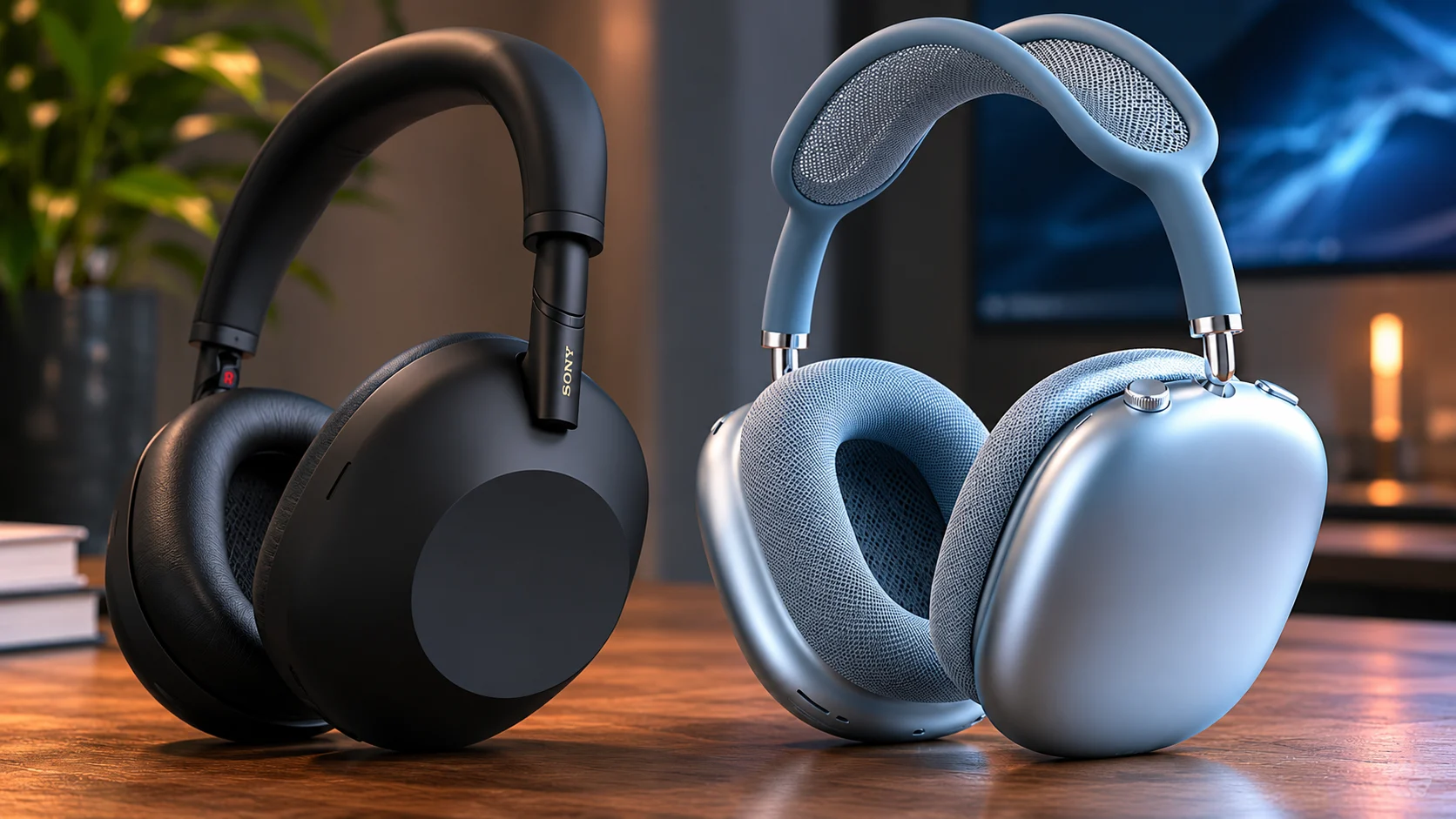
I’ve spent the last three weeks constantly swapping between the newly released Sony WH-1000XM6 and Apple’s long-awaited AirPods Max 2. If you are dropping around five hundred dollars on headphones, you probably expect absolute perfection.
You won’t get it. Both of these premium cans have frustrating quirks that drive me crazy.
But they also represent the absolute peak of consumer audio right now. I didn’t test these in a perfectly quiet studio. I wore them through chaotic subway commutes, sweaty gym sessions, windy dog walks, and dragging eight-hour office shifts. I tossed them into backpacks, left them on my desk, and took conference calls near busy traffic.
Sony finally realized we actually want to fold our travel headphones again, slapping a massive 12-microphone array inside the WH-1000XM6 and reviving the beloved collapsible hinges. Apple stuck stubbornly to its heavy aluminum aesthetic for the AirPods Max 2 but brought the incredibly smart H2 chip inside, killed the Lightning port for USB-C, and added features like Live Translation and Adaptive Audio.
So which one actually deserves your money? Let’s break down exactly how they behave in the real world.
Quick Specs Comparison
| Feature | Sony WH-1000XM6 | Apple AirPods Max 2 |
| Release Price | $459.99 | $549.00 |
| Weight | 250g (8.8 oz) | 386.2g (13.6 oz) |
| Processor | Sony QN3 | Apple H2 (in each ear cup) |
| Battery Life (ANC On) | Up to 30 hours | Up to 20 hours |
| Bluetooth Version | 5.3 (LE Audio ready) | 5.3 |
| Hi-Res Audio | LDAC | Lossless (wired via USB-C only) |
| Portability | Folds down, hard case included | Doesn’t fold, slip-on Smart Case |
Is the Sony WH-1000XM6 Good?
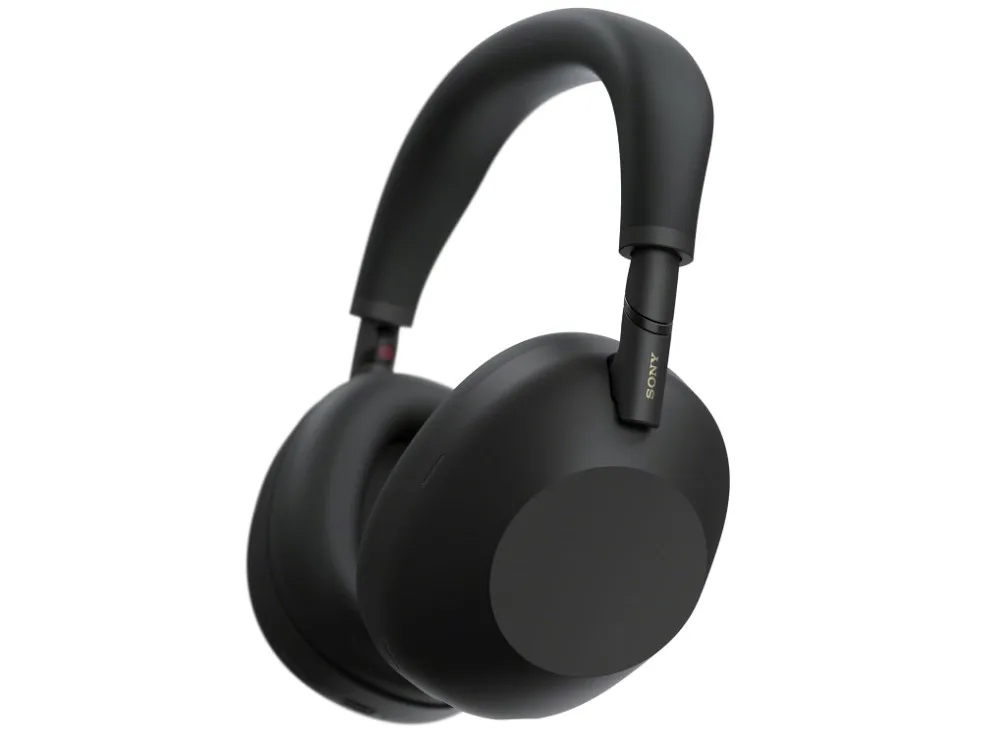
Sony heard the complaints about the XM5’s rigid design loud and clear. The WH-1000XM6 brings back the folding hinges, meaning these actually fit inside a normal-sized messenger bag without monopolizing the entire main compartment.
The plastic build still feels a bit less premium than I’d like for the price, but the tradeoff is the ridiculously light 250-gram weight. I wore these for a six-hour flight and entirely forgot they were on my head. Sony upgraded the internals to the new QN3 noise-canceling chip, and they managed to cram 12 microphones into the chassis—six of them strictly dedicated to killing background noise. The silence is jarringly good.
What I Like:
- The folding design is back. Finally.
- The 250g weight makes them disappear on your head.
- The ANC is aggressively strong, especially against low engine rumbles.
- LDAC support keeps Android users happy with high-res wireless streaming.
- 30 hours of battery easily gets me through a full week of commuting.
- The touch controls are highly responsive, even with cold fingers.
- Multipoint switching is practically instant between my laptop and phone.
What Could Be Better:
- The matte plastic still attracts greasy fingerprints almost immediately.
- The 30mm drivers haven’t physically changed since the last generation.
- The hinges, while useful, introduce a slight creaking sound if you stretch them too wide.
- Wind noise reduction still struggles a bit on very gusty days.
| Pros | Cons |
| Folds down for easy travel | Build feels a bit plasticky |
| Class-leading battery life | Fingerprint magnet |
| Unbelievably comfortable | Touch controls misfire in the rain |
Personal Recommendation:
If your primary goal is finding a comfortable, long-lasting travel companion that destroys background noise, the XM6 is the obvious choice. The return of the folding hinges makes them infinitely more practical than their predecessor.
Final Rating: 4.7/5

Is the Apple AirPods Max 2 Good?
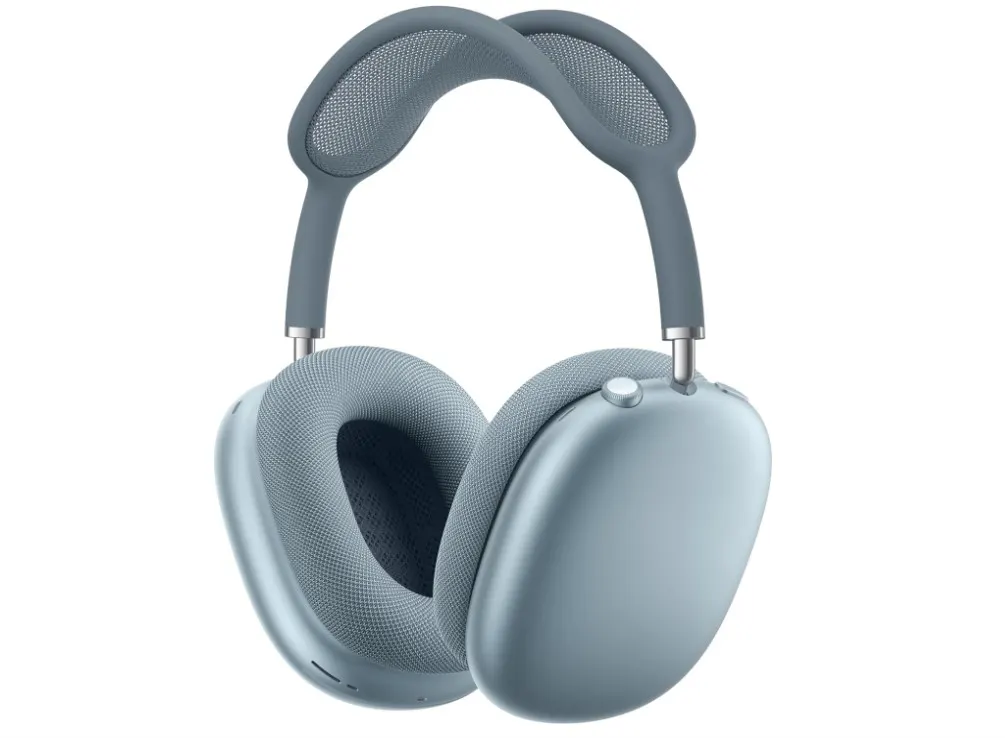
Apple didn’t change the outside. At all. The AirPods Max 2 look identical to the 2020 originals, retaining the stainless steel headband, the knit-mesh canopy, and those massive, cold aluminum ear cups.
They also kept the weight. At 386.2 grams, you definitely feel these on your neck. But the magic here is entirely internal. The H2 chip radically transforms the listening experience. Adaptive Audio automatically blends noise cancellation and transparency based on your environment, and it works flawlessly. If I’m walking past construction, it silences the jackhammer. If a barista talks to me, Conversation Awareness automatically drops the music volume and amplifies their voice.
And yes, they finally have USB-C, which unlocks true lossless 24-bit/48kHz audio if you wire them directly to a Mac or iPad.
What I Like:
- Adaptive Audio feels like literal magic in unpredictable city environments.
- The aluminum and steel construction feels incredibly luxurious.
- The Digital Crown is still the best volume control mechanism on any headphone.
- USB-C lossless audio playback is a huge win for audiophiles.
- Ear cushions detach magnetically for effortless cleaning.
- Transparency mode sounds so natural it feels like you aren’t wearing headphones.
- Live Translation works surprisingly well for quick bilingual interactions.
What Could Be Better:
- 20 hours of battery life is totally unacceptable in 2026.
- They are incredibly heavy and cause neck fatigue after a few hours.
- The Smart Case still exists, still looks ridiculous, and still leaves the headband entirely exposed.
- No power button. You have to use the case to put them to sleep properly.
- No custom EQ settings anywhere in the software.
| Pros | Cons |
| Unbeatable Transparency mode | Heavy and fatiguing over time |
| Premium metal build | Mediocre 20-hour battery |
| USB-C with wired lossless | The Smart Case offers no protection |
Personal Recommendation:
Buy the AirPods Max 2 if you live deep inside the Apple ecosystem and care deeply about build materials. The software integration is so slick that it almost makes up for the heavy weight and the frustrating battery life. Almost.
Final Rating: 4.4/5

Detailed Head-to-Head Comparison

Sound Quality
Let’s cut right to it. Both sound fantastic, but they handle music very differently.
Apple tuned the AirPods Max 2 with a wide, cinematic soundstage. Using the new high-dynamic-range amplifiers paired with the H2 chip, acoustic tracks feel airy. Listening to Fleetwood Mac’s “Dreams,” you can distinctly place the instruments around your head, especially with Spatial Audio turned on. However, Apple locks you out of the EQ. You get what Apple thinks sounds best.
Sony uses the same 30mm drivers from the XM5, but the QN3 chip seems to process the audio a bit cleaner. Out of the box, the XM6 sounds a bit muddy in the lower mids. But Sony’s Headphone Connect app gives you a granular equalizer. Once I bumped up the treble and dialed back the lower-mid frequencies, the XM6 came alive. They also support LDAC for wireless high-res audio, which the Max 2 lacks entirely over Bluetooth.
✅ My Take: I prefer Apple’s out-of-the-box tuning, but Sony wins because I can actually change how it sounds. Plus, wired lossless on Apple is great, but LDAC wireless on Sony is far more practical.
Winner: Sony WH-1000XM6
Bass Performance
The AirPods Max 2 deliver incredibly clean, controlled sub-bass. It never bleeds into the vocals. Hip-hop tracks hit with a tight, physical thud that you can feel vibrating through the aluminum cups. It’s mature bass.
Sony, historically, loves aggressive bass. The XM6 will rattle your skull if you slide the “Clear Bass” slider up in the app. Even at neutral settings, the bass is thick and punchy. It makes electronic music and heavy metal sound incredibly aggressive and fun, but it can occasionally overwhelm subtle acoustic details.
✅ My Take: If you want accurate, studio-style bass, Apple takes it. If you want fun, skull-shaking energy for the gym, Sony dominates.
Winner: Tie

Comfort
This isn’t even a contest.
The AirPods Max 2 weigh 386.2 grams. The mesh canopy does a decent job distributing that weight, but after about two hours at my desk, the crown of my head started aching. Furthermore, the clamping force is intense out of the box.
The Sony WH-1000XM6 weighs 250 grams. The vegan leather ear pads are ridiculously soft, and the newly widened headband distributes pressure perfectly. I accidentally fell asleep wearing the XM6 on a flight. I would never be able to sleep in the heavy, metal AirPods Max 2.
✅ My Take: Sony engineered a headphone you can wear all day. Apple engineered a beautiful metal object that happens to go on your head.
Winner: Sony WH-1000XM6
Fit Stability
Comfort is one thing; staying put is another.
I took both pairs on a light jog. The AirPods Max 2 shifted constantly. Because the aluminum ear cups are so heavy, momentum pulls them downward every time your foot strikes the pavement. I had to constantly push them back up my ears.
The Sony WH-1000XM6 stayed clamped securely. They aren’t running headphones—your ears will sweat profusely under the synthetic leather—but the lighter plastic chassis means they don’t bounce around.
✅ My Take: Neither are meant for intense cardio, but the XM6 handles movement vastly better.
Winner: Sony WH-1000XM6

Battery Life
Apple claims 20 hours of battery life with ANC turned on. In my testing, setting the volume to about 60%, I squeezed out around 18.5 hours. In 2026, for a $549 headphone, that is borderline insulting. I found myself charging the Max 2 every two to three days.
Sony claims 30 hours with ANC. I hit 31 hours before they finally died. I charge the XM6 maybe once a week. Furthermore, a quick 3-minute charge on the Sony gives you 3 hours of playback.
✅ My Take: Apple isn’t even trying to compete here.
Winner: Sony WH-1000XM6
ANC & Passive Isolation
Sony packed 12 microphones into the XM6. The active noise cancellation is terrifyingly good. It completely deletes the low-frequency roar of a jet engine and the rumble of a train car. Passive isolation is also excellent because the ear pads physically block your ear canals.
Apple’s H2 chip boasts a 1.5x improvement over the first-generation Max. The ANC is spectacular, specifically at blocking higher frequencies like human voices and office chatter.
But where Apple truly destroys Sony is Transparency Mode. Pushing the button on the Max 2 opens up the world so naturally it sounds like you aren’t wearing headphones. Sony’s ambient sound mode still sounds slightly digitized and processed. Additionally, Apple’s Adaptive Audio intelligently switching between ANC and Transparency based on surrounding noise is a feature I sorely missed whenever I switched back to the Sony.
✅ My Take: Sony blocks out more deep, low-end rumble. Apple handles voices better and has a vastly superior transparency mode.
Winner: Apple AirPods Max 2

Call Quality
Taking calls in a quiet room, both sound great. Taking calls outside on a windy street is a different story.
Sony’s intelligent beamforming isolates your voice well, but the wind algorithms sometimes clip the ends of your words, making you sound robotic for a split second while it suppresses a gust of wind.
Apple utilizes Voice Isolation through the H2 chip. My test callers repeatedly told me I sounded like I was in a quiet room, even when a bus drove past me. The microphone array on the Max 2 picks up natural vocal timbre much better than the XM6.
✅ My Take: Apple’s microphones combined with the H2 processing make it the superior choice for professional calls.
Winner: Apple AirPods Max 2
App Support & Ecosystem
If you have an Android phone, the AirPods Max 2 are basically dumb headphones. You get ANC and basic Bluetooth audio. No spatial audio, no firmware updates, no settings control.
If you have an iPhone, the integration is flawless. They instantly switch between your Mac, iPad, and phone. The new Live Translation feature baked into iOS is incredibly cool—I used it to order coffee in a neighborhood bakery where the owner primarily speaks Spanish, and it translated directly into my ears.
Sony uses the Headphones Connect app, available on both iOS and Android. It offers multipoint switching, a custom EQ, and a feature called Speak-to-Chat (which I immediately turn off because it pauses my music if I clear my throat).
✅ My Take: Apple’s ecosystem integration is smoother if you own all Apple gear, but Sony’s app is platform-agnostic and offers actual EQ customization.
Winner: Tie
Durability
The Sony XM6 is mostly recycled plastic. I dropped them onto a hardwood floor from desk height, and they bounced. No damage. However, the matte finish gets shiny and greasy where your fingers touch the ear cups.
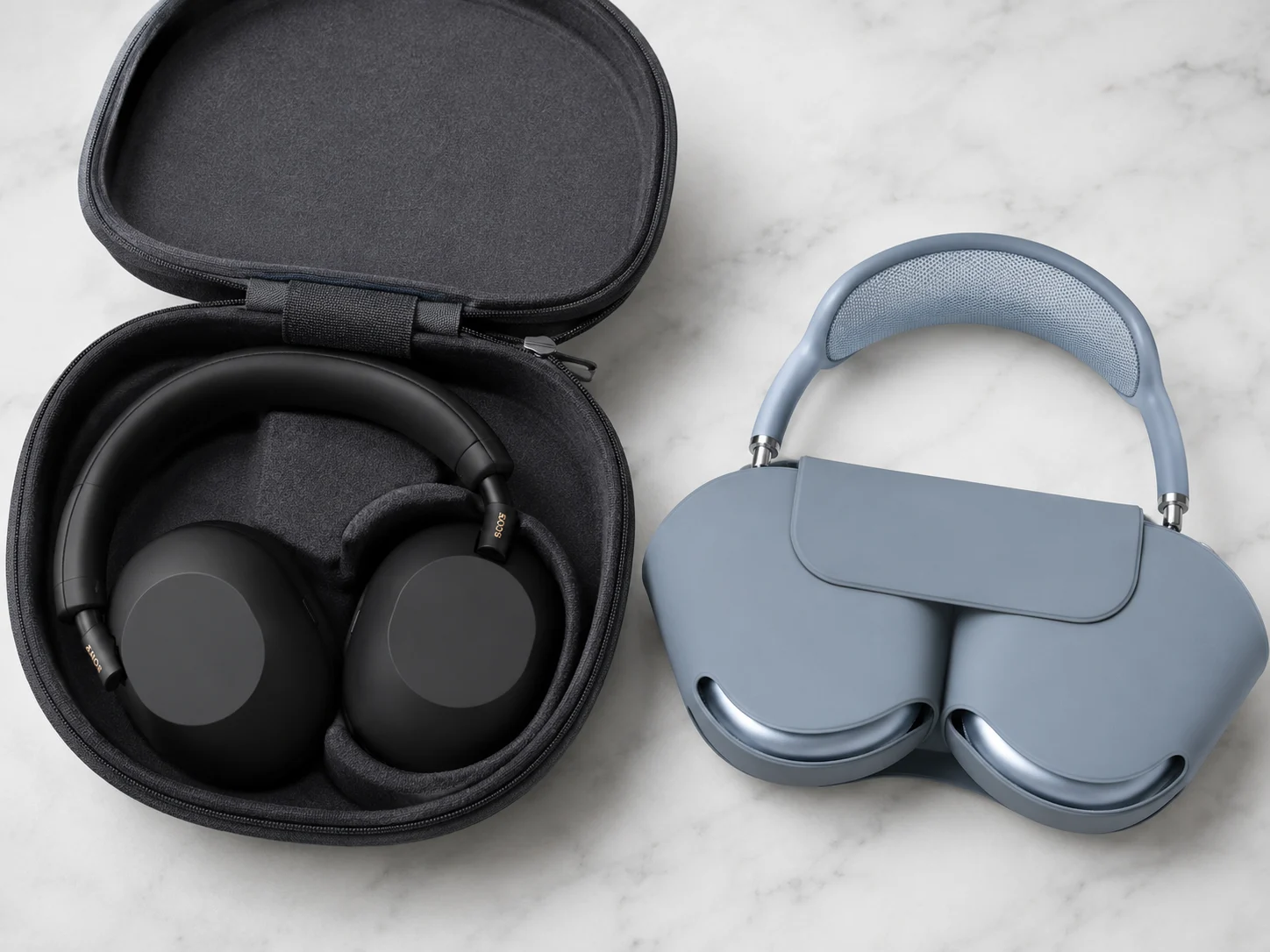
The AirPods Max 2 feel indestructible because of the stainless steel band and aluminum cups. But drop them, and that aluminum will dent or scratch permanently. Then there’s the Smart Case. Apple’s slip-case leaves the mesh headband entirely exposed in your bag to get snagged on keys or pens. Sony gives you a proper, hard-shell zippered travel case that protects the entire unit.
✅ My Take: Apple uses stronger materials, but Sony actually protects your investment with a real case and a forgiving plastic shell.
Winner: Sony WH-1000XM6
Value for Money
At $459.99, the Sony XM6 isn’t cheap. But you get a hard case, 30 hours of battery, top-tier ANC, and the ability to fold them up.
At $549.00, the AirPods Max 2 charge a premium for the Apple logo and the aluminum build. You don’t get a real case, you only get 20 hours of battery, and you can’t EQ them. They are undeniably luxurious, but the price-to-performance ratio is heavily skewed.
✅ My Take: Sony offers significantly more practical hardware for nearly a hundred dollars less.
Winner: Sony WH-1000XM6

Overall Verdict
Choosing between these two comes down to your daily routine.
You should buy the Sony WH-1000XM6 if you are a frequent traveler, commuter, or someone who wears headphones for four or more hours at a time. The lightweight comfort, the 30-hour battery, the aggressive ANC, and the return of the foldable design make them the ultimate daily driver. They are pragmatic, reliable, and sound fantastic once you tweak the EQ.
You should buy the Apple AirPods Max 2 if you primarily work at a desk, deeply value premium materials, and live entirely within the Apple ecosystem. The Adaptive Audio and Transparency modes are mind-blowing, and the wired lossless USB-C audio is a treat. Just be prepared to charge them constantly and nurse a slightly sore neck at the end of the day.
Personally? I kept reaching for the Sony WH-1000XM6 before heading out the door. The convenience of folding them into my bag without worrying about a dented aluminum ear cup won me over.


Full Technical Specifications
| Specification | Sony WH-1000XM6 | Apple AirPods Max 2 |
| Chipset | Sony QN3 Processor | Dual Apple H2 Chips |
| Microphones | 12 (6 dedicated to ANC) | 9 (8 for ANC, 3 for voice) |
| Bluetooth | Version 5.3 | Version 5.3 |
| Supported Codecs | SBC, AAC, LDAC, LE Audio | SBC, AAC, Lossless (Wired USB-C) |
| Battery Life | 30 hours (ANC On) | 20 hours (ANC On) |
| Charging Port | USB-C | USB-C |
| Weight | 250g | 386.2g |
| Physical Controls | Touch sensor + 2 Buttons | Digital Crown + Noise Control Button |
| Foldable Design | Yes | No (Ear cups rotate flat) |
| Included Case | Hard-shell zip case | Magnetic Smart Case (Slip cover) |
FAQs
Do the AirPods Max 2 fold up?
No, they do not. The ear cups rotate to lay flat, but the headband does not collapse. You have to slide them into the included Smart Case, which takes up a significant amount of horizontal space in a backpack.
Can you use the Sony WH-1000XM6 wired?
Yes. Sony includes a standard 3.5mm headphone cable in the box. You can plug them into airplane entertainment systems or standard audio jacks even if the battery is dead.
Can I listen to lossless audio on the AirPods Max 2 wirelessly?
No. Bluetooth bandwidth does not support true lossless audio. To get 24-bit/48kHz lossless audio on the Max 2, you must physically connect them to a compatible device using a USB-C to USB-C cable.
Which headphone is better for the gym?
Technically neither, as neither holds an official IP rating for sweat resistance. However, the Sony WH-1000XM6 is much lighter and stays clamped to your head better during movement. The heavy aluminum ear cups on the AirPods Max 2 tend to slip backward if you lie down on a bench press.
Does the Sony XM6 work well with an iPhone?
Absolutely. You just download the Sony Headphones Connect app from the App Store. You will miss out on Apple-specific features like native Spatial Audio head-tracking and seamless iCloud device switching, but the music quality, ANC, and basic multipoint pairing work flawlessly via the AAC codec.