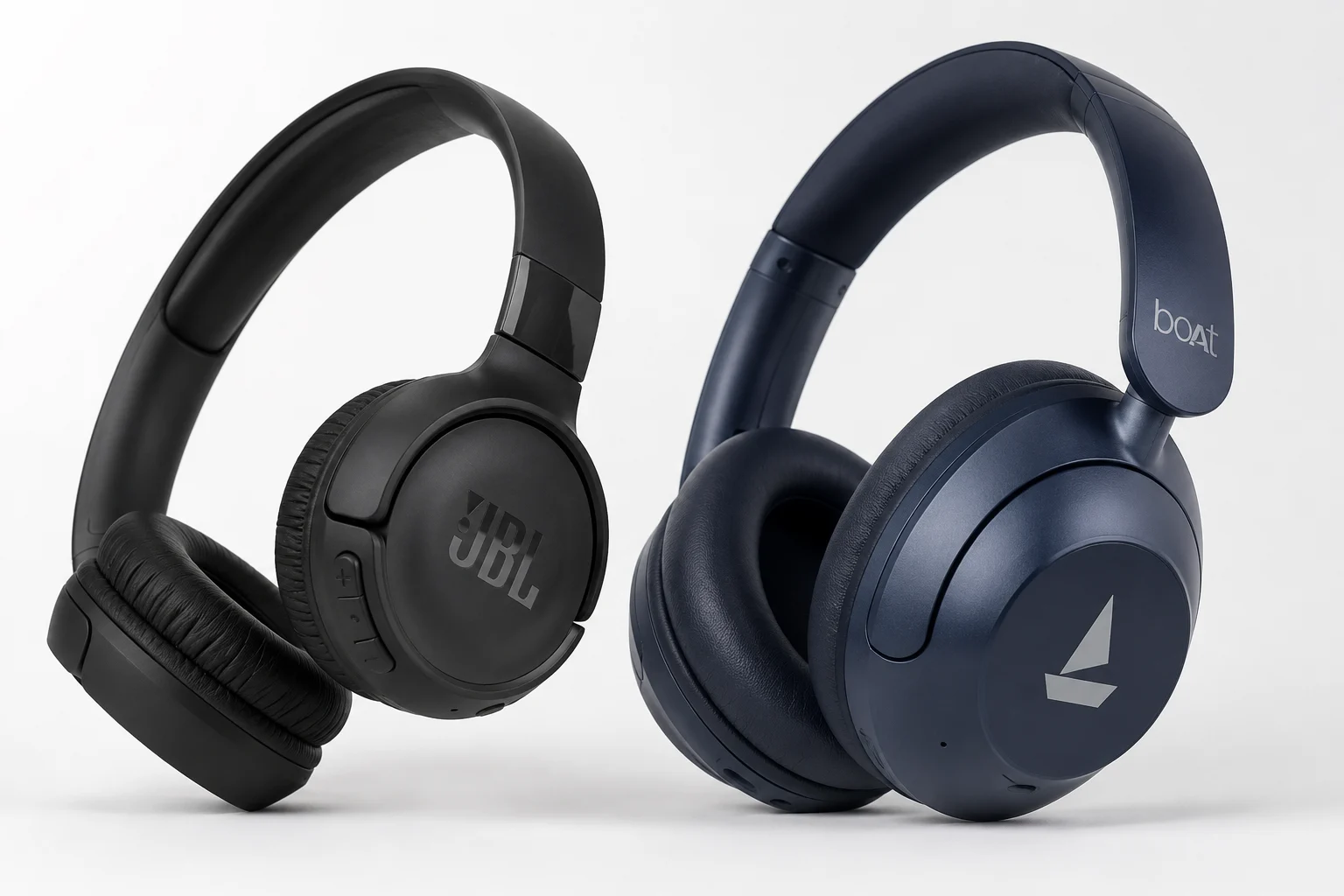
I spend a lot of time with budget wireless headphones because most people do not need to spend $300+ to get something that sounds decent and lasts through the day. The JBL Tune 520BT and boAt Rockerz 650 Pro both sit in that sweet spot under $50 (or equivalent) and promise long battery life with Bluetooth 5.3. I put both through normal daily routines – subway commutes, full workdays with video calls, evening podcasts, weekend travel, and casual music listening – to see where each one actually holds up.
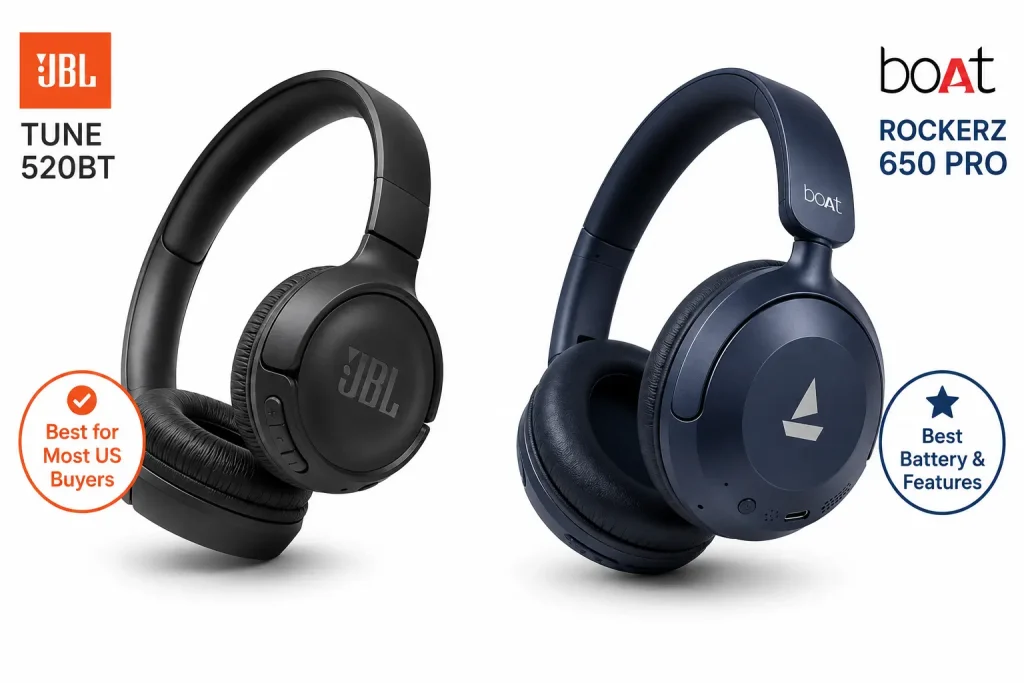
The JBL is an on-ear model that feels barely there on your head. The boAt is a proper over-ear design with bigger cups. Neither has active noise cancellation, so expectations stay realistic for street noise or open offices. One has physical buttons and a mature app. The other brings touch controls, Dolby Audio, low-latency gaming mode, and a much longer claimed battery. Availability in the US also plays a role – more on that later.
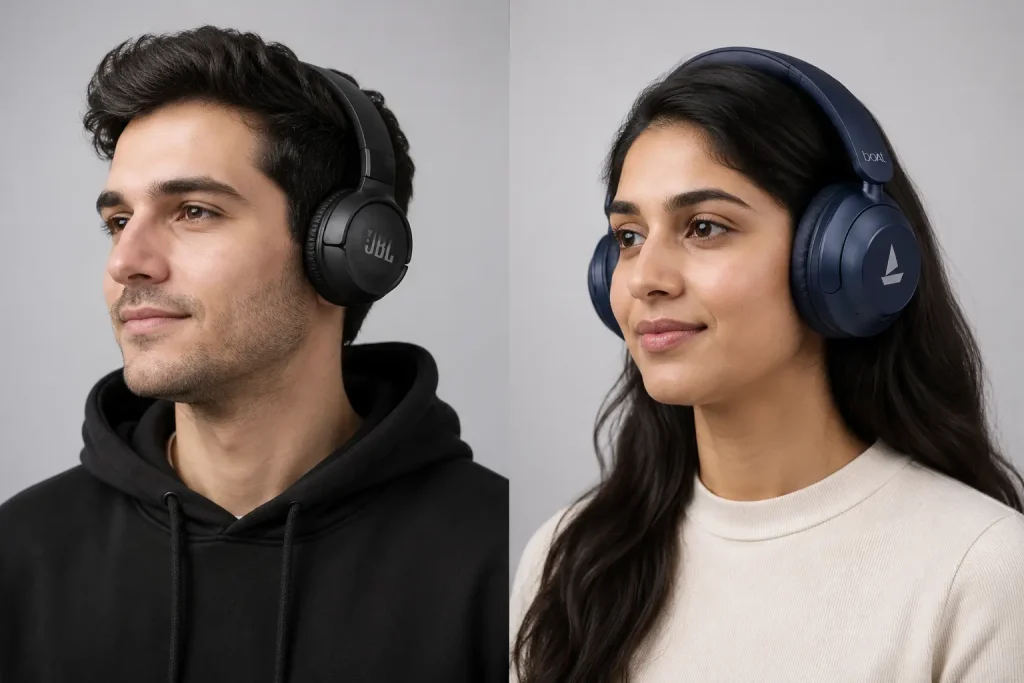
JBL Tune | Samsung US
Quick Answer
The JBL Tune 520BT is the smarter buy for most people in the US right now. It is lighter, easier to find with full local support, and delivers reliable JBL bass in a simple package that does not frustrate during daily use. The boAt Rockerz 650 Pro offers stronger battery claims, more modern features like touch controls and Dolby, plus better passive isolation from its over-ear fit – but it is harder to source reliably in the US and feels like the riskier long-term choice for most buyers here.
Winner by Category
| Category | Winner |
|---|---|
| Sound Quality | JBL |
| Bass | boAt |
| ANC | Tie (none) |
| Comfort | boAt |
| Battery | boAt |
| Calls | boAt |
| App | JBL |
| Value | JBL |
| Overall | JBL |
Quick Specs Comparison
| Feature | JBL Tune 520BT | boAt Rockerz 650 Pro |
|---|---|---|
| Design | On-ear, foldable, 157g | Over-ear, foldable, ~281g |
| Drivers | 33mm | 40mm dual |
| Bluetooth | 5.3 | 5.3 |
| Battery (claimed) | Up to 57 hours | Up to 80 hours |
| Charging | USB-C, 2h full, 5min = +3h | USB-C, ~1h full, 10min = ~10h |
| Controls | Physical buttons | Touch & swipe |
| Microphones | 1 mic + Voice Aware | 2 mics with AI ENx |
| App Support | JBL Headphones (EQ) | boAt Hearables (Adaptive EQ) |
| Extra Features | Multipoint switching | Dolby Audio, BEAST 60ms mode, IPX4, aux cable |
| ANC | None | None |
| Best For | Lightweight daily carry | Long sessions + features |
How We Tested
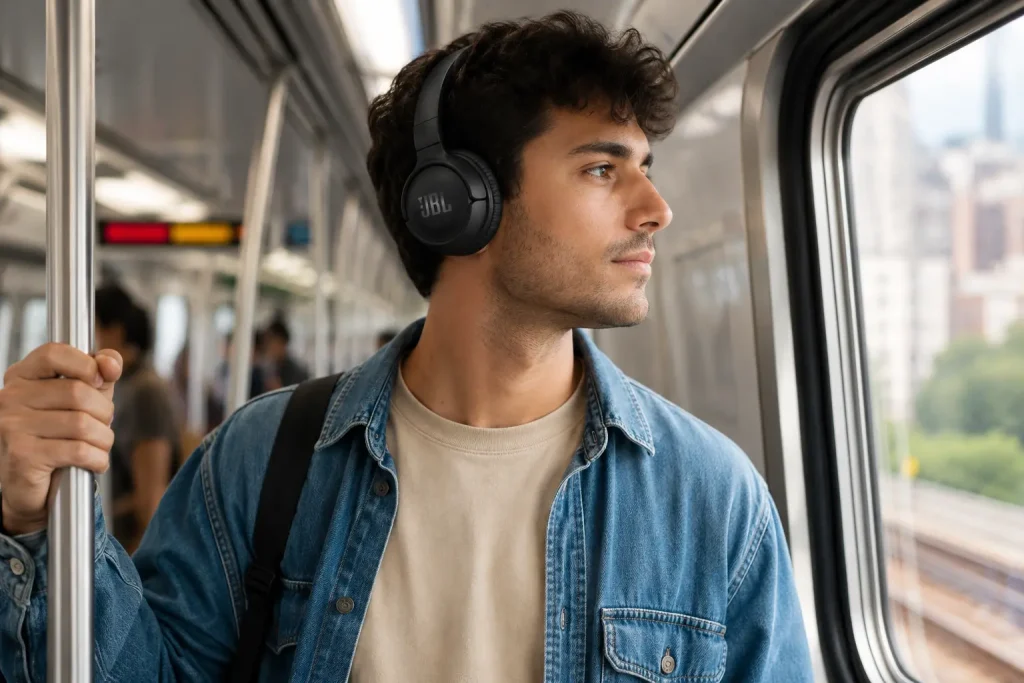
I used both headphones exactly how most people would – no lab equipment, no fancy measurement rigs. Testing happened over several weeks in real environments: morning subway rides with crowd noise and announcements, full 8-hour office days with back-to-back Teams and Zoom calls, evening walks with podcasts, long train rides, and relaxed home listening to playlists across genres. I switched between an iPhone and Android phone to check app behavior and Bluetooth stability in busy areas.

Evaluation focused on practical things: does the sound stay enjoyable after two hours, do my ears get sore or warm, how many days can I go without charging, do calls stay clear when walking outside or in a café, and do the controls work without looking at the headphones. I also paid attention to how often I reached for the case or charger and whether the fit stayed secure during normal movement.
Limitations are straightforward. These are subjective impressions based on my head shape and preferences. Results can vary with different ear sizes, hair, glasses, or exact phone models. Battery numbers are real-world estimates from daily use, not controlled drain tests. Neither headphone has ANC, so isolation performance reflects passive design only. I compared them directly against each other and against what I expect at this price, not against $300 flagships.
Is the JBL Tune 520BT Good?
Yes, especially if you want something simple, light, and easy to live with every day.
What I Like
- Super light at 157g – I barely noticed it on longer walks or commutes.
- Folds flat and slips into a jacket pocket or small bag without bulk.
- JBL Pure Bass delivers punch without turning everything into mud; the app EQ lets you tame it if needed.
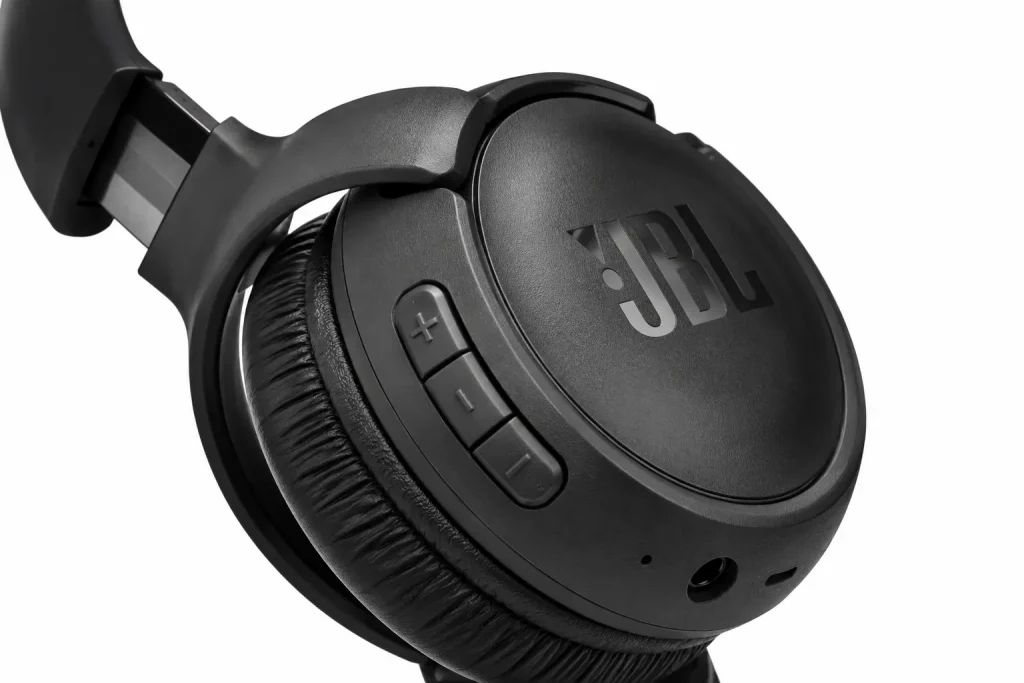
- Physical buttons on the earcup feel clicky and reliable – no accidental skips when adjusting fit.
- Battery easily handled two full days of mixed use (music, calls, podcasts) with power left.
- Quick 5-minute charge gave a useful boost before heading out.
- Voice prompts are clear and the seamless call switching between devices worked without drama.
- Widely available in the US with straightforward warranty and returns.
What Could Be Better
- On-ear pads get warm after 2 to 3 hours; not ideal for all-day wear in warmer weather.
- No ANC and limited passive isolation – train rumble and office chatter come through clearly.
- Single mic is average in windy or noisy outdoor conditions.
- No included aux cable for wired backup (purely wireless experience).
- All-plastic build feels exactly like the budget product it is.
- No dedicated transparency or ambient mode.
Pros & Cons
| Pros | Cons |
|---|---|
| Lightweight and portable | On-ear warmth after long sessions |
| Reliable buttons | No ANC or strong isolation |
| Solid battery + fast top-up | Average mic in wind |
| Good app EQ | Plastic feel |
| Easy US availability | No wired option |
Personal Recommendation The JBL Tune 520BT is a safe, no-nonsense choice for anyone who wants decent sound, long battery, and zero hassle in the US. It will not wow audiophiles, but it will not frustrate you either. Great for students, commuters, or anyone who just wants headphones that work. Rating: 8.2/10
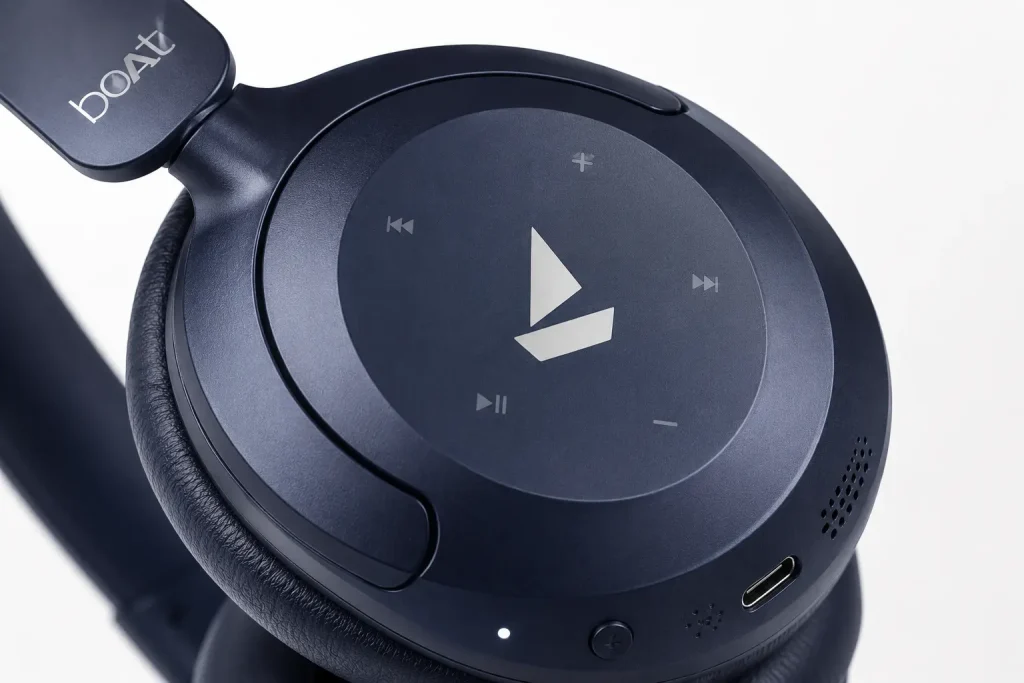
Is the boAt Rockerz 650 Pro Good?
It is good on paper and delivers strong value if you can actually get it in your region without import headaches.
What I Like
- Claimed 80-hour battery is no joke – easily covered four or five days of moderate use in testing.
- Over-ear cups create noticeably better passive seal against background noise than the JBL.
- Dolby Audio and 40mm drivers give a bigger, more immersive presentation with strong bass.
- Touch and swipe controls worked smoothly once I got used to the gestures.
- BEAST low-latency mode made YouTube and casual gaming feel responsive.
- Dual ENx mics handled calls better in noisy environments than the JBL’s single mic.
- IPX4 rating and included aux cable add practical flexibility.
- App Adaptive EQ offers quick bass or balanced presets.
What Could Be Better
- Heavier feel (~281g) creates more pressure on top of the head during very long sessions.
- Touch controls occasionally misread when adjusting the fit or wearing a hat.
- Availability in the US is limited – mostly import or third-party sellers with variable support.
- Build quality is fine for the price but nothing special.
- Sound can lean bass-heavy; mids and vocals sometimes take a back seat without EQ tweaks.
- No active noise cancellation despite the over-ear design.
Pros & Cons
| Pros | Cons |
|---|---|
| Excellent claimed battery | Heavier than JBL |
| Better passive isolation | Touch controls can be inconsistent |
| Dolby + strong bass | Harder to buy with full US support |
| Low latency mode + aux cable | Bass can overpower mids |
| IPX4 sweat resistance | No ANC |
Personal Recommendation If you live somewhere the boAt is easy to buy and support locally (or you do not mind import), it offers more features and longer battery for similar money. For most US buyers the sourcing friction makes it less appealing.
Rating: 7.6/10

Head-to-Head Comparison
Sound Quality JBL’s tuning feels more controlled and versatile once you use the app EQ. The boAt sounds bigger and more fun out of the box thanks to Dolby and larger drivers, but it can get boomy. Real-world observation: on a crowded bus the JBL stayed clearer for podcasts while the boAt gave more impact to music. My Take: Slight edge to JBL for everyday variety. JBL: 7.8/10 | boAt: 7.5/10
Bass Performance boAt’s 40mm drivers and Dolby processing deliver deeper, more physical bass. JBL’s Pure Bass is punchy and enjoyable but stays tighter. My Take: boAt wins for bass lovers. JBL: 7.4/10 | boAt: 8.1/10
ANC / Transparency Mode Neither has active noise cancellation. The boAt’s over-ear fit blocks more high-frequency chatter passively. JBL lets more sound in, which some people actually prefer for awareness. No dedicated transparency mode on either. My Take: Tie on features; boAt better passive performance. JBL: 4.0/10 | boAt: 5.5/10
Comfort After three hours the JBL’s on-ear pads started warming my ears noticeably. The boAt’s larger cups felt more natural for longer stretches but added weight on the crown. During one long train ride the JBL stayed put better with movement; the boAt occasionally needed readjustment. My Take: boAt for all-day sessions if weight is not an issue. JBL: 7.0/10 | boAt: 7.8/10
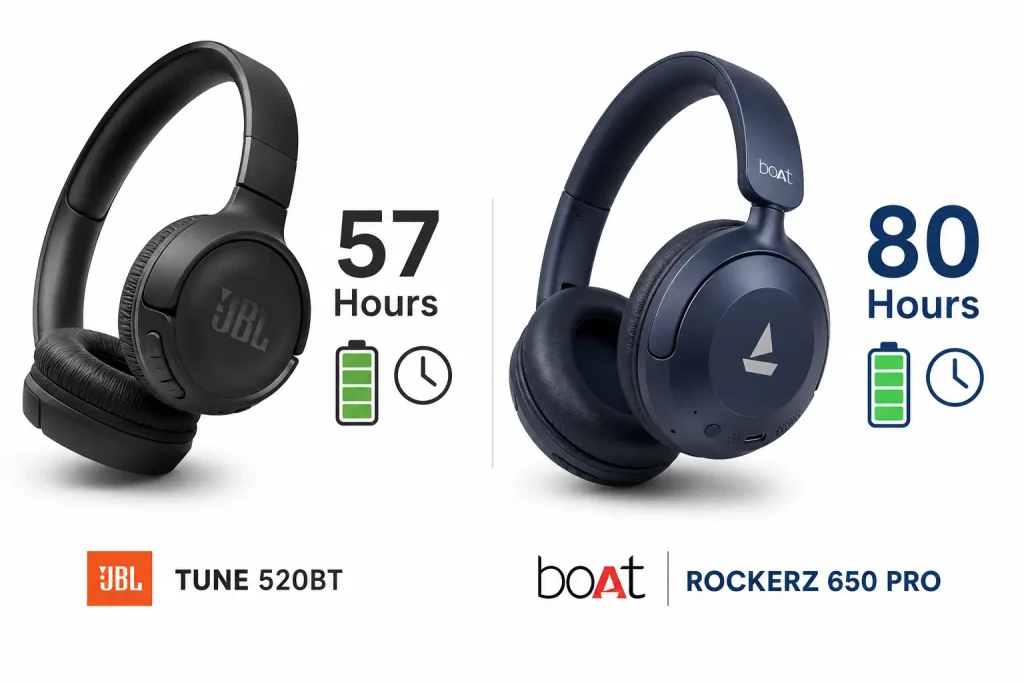
Battery Life JBL delivered consistent 50+ hours in mixed real use. boAt easily pushed past 70 hours with similar habits. Both easily outlast a full workweek without daily charging. My Take: Clear win for boAt on paper and in practice. JBL: 8.5/10 | boAt: 9.3/10
Charging Speed JBL’s 5-minute boost for 3 extra hours is genuinely useful before leaving the house. boAt’s 10-minute charge for roughly 10 hours is even better for emergency top-ups. Full charges: JBL ~2 hours, boAt ~1 hour. My Take: boAt faster overall. JBL: 8.0/10 | boAt: 9.0/10
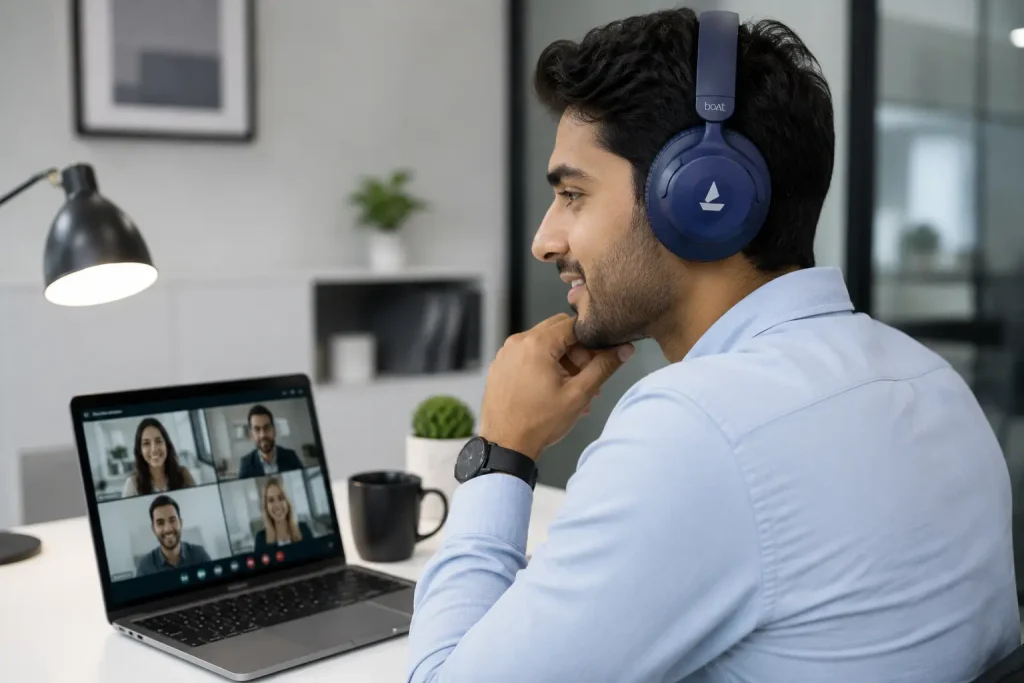
Call Quality boAt’s dual ENx mics did a better job reducing street and café noise during outdoor calls. JBL’s single mic with Voice Aware was acceptable indoors but picked up more wind. My Take: boAt for frequent callers. JBL: 6.5/10 | boAt: 7.8/10
App Support JBL’s app feels polished with straightforward EQ and firmware updates. boAt’s app offers Adaptive EQ presets and is improving but feels slightly less refined. Both work on Android and iOS. My Take: JBL has the more mature experience. JBL: 8.0/10 | boAt: 7.3/10
Connectivity & Bluetooth Stability Both stayed connected reliably through a full subway ride and around the office. JBL’s multipoint-style switching for calls felt seamless. boAt’s dual pairing worked well when jumping between phone and laptop. My Take: Very close; both good at this price. JBL: 8.2/10 | boAt: 8.0/10
Build Quality & Durability Both are plastic-heavy budget builds. JBL feels a bit more refined in hand. boAt adds IPX4 splash resistance and an included aux cable for wired backup. My Take: Slight edge to boAt for practical extras. JBL: 7.0/10 | boAt: 7.5/10
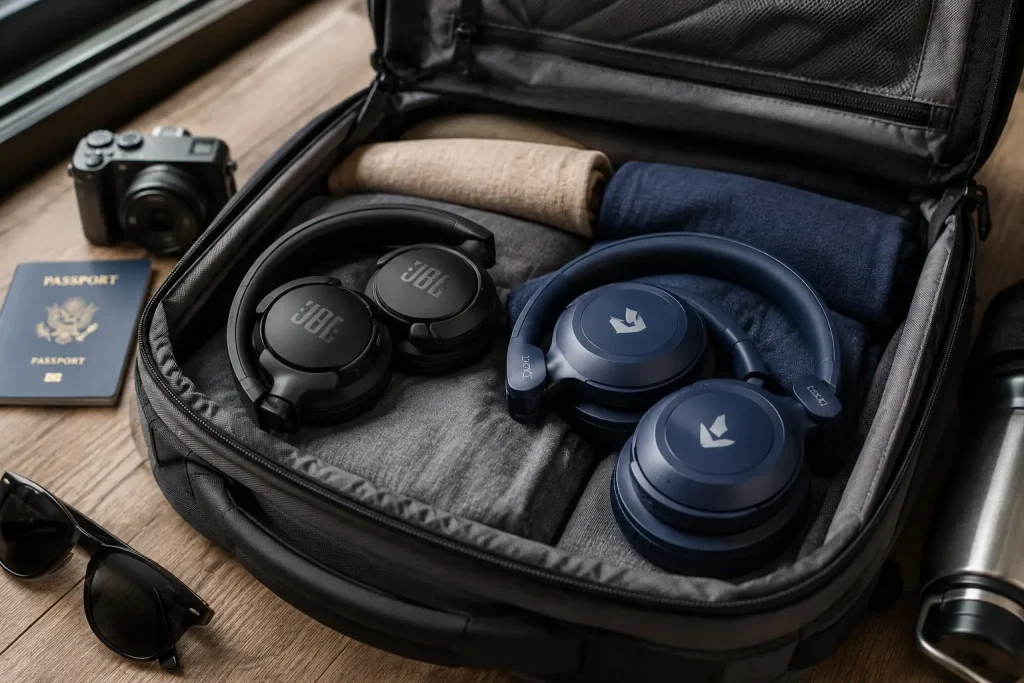
Travel Friendliness JBL folds smaller and weighs less – easier to throw in a day bag or even a large pocket. boAt’s bigger cups and extra weight make it less ideal for minimal packing, though the battery means fewer charges on long trips. My Take: JBL wins for carry convenience. JBL: 8.5/10 | boAt: 7.2/10
Office Use JBL’s lighter weight and reliable buttons made it less distracting during long focus periods. boAt’s better passive isolation helped with nearby conversations. My Take: Depends on your office noise level. JBL: 7.8/10 | boAt: 7.9/10
Gym / Workouts boAt’s IPX4 rating and over-ear seal give it the edge for light sweat sessions. JBL has no sweat resistance rating and on-ear fit can slip more with movement. My Take: boAt safer choice. JBL: 5.5/10 | boAt: 7.5/10
Value for Money At current US pricing around $40, the JBL offers better peace of mind with local availability and support. The boAt can feel like better specs per dollar but carries sourcing and long-term support questions for US buyers. My Take: JBL takes it for most people here. JBL: 8.7/10 | boAt: 7.8/10
Buyer-Specific Recommendations
Best for Travel – boAt Rockerz 650 Pro Huge battery and decent passive isolation make long flights or train rides more manageable without constant charging.
Best for Office Work – JBL Tune 520BT Lighter weight reduces fatigue during long desk sessions and buttons are more reliable when you are focused.
Best for Students – JBL Tune 520BT Easy to find, affordable, folds small for campus bags, and the app helps tweak sound for different study playlists.
Best for Android Users – Tie (slight JBL) Both apps work fine, but JBL’s ecosystem feels a touch more polished on Android.
Best for iPhone Users – JBL Tune 520BT Seamless device switching and voice prompts integrate cleanly with iOS.
Best for Calls – boAt Rockerz 650 Pro Dual ENx mics handled background noise better in real street and café tests.
Best for Workouts – boAt Rockerz 650 Pro IPX4 rating and more secure over-ear fit handle light sweat and movement better.
Best for Music Lovers – boAt Rockerz 650 Pro (with EQ) Bigger soundstage and Dolby processing reward tweaking in the app.
Best Value – JBL Tune 520BT Reliable performance, easy US purchase and returns, and no surprises make it the safer everyday investment.
Alternatives Worth Considering
If your budget stretches further, the Sony WH-1000XM5 or WH-1000XM4 deliver excellent ANC, better sound refinement, and far superior build – worth it if you commute on noisy trains or fly often. Bose QC45 remains a comfort king with strong noise blocking. Sennheiser Momentum 4 offers class-leading battery and more neutral sound. These cost several times more, so only step up if ANC and refinement matter more than saving money.
Who Should Buy Which?
Buy the JBL Tune 520BT if:
- You want something lightweight you can wear for hours without neck or ear fatigue
- Easy availability, local warranty, and simple returns matter to you
- You prefer physical buttons that never misfire
- You mainly listen to podcasts, calls, and varied music rather than bass-heavy tracks only
- You live in the US and want zero import hassle
Buy the boAt Rockerz 650 Pro if:
- Maximum battery life and fewer charges are your top priority
- You like touch controls and extra features like low-latency mode and Dolby
- You prefer over-ear passive isolation and do not mind a bit more weight
- You can easily buy it locally or accept import logistics
- You want the included aux cable and IPX4 rating for flexibility
Comparison Summary Table
| Category | JBL Tune 520BT | boAt Rockerz 650 Pro | Notes |
|---|---|---|---|
| Portability | Excellent | Good | JBL folds smaller and lighter |
| Battery Real-World | Very Good | Excellent | boAt lasts noticeably longer |
| Everyday Comfort | Good | Very Good | boAt wins long sessions |
| Call Performance | Average | Good | boAt dual mics help |
| Sound Versatility | Good | Good | JBL easier to tune |
| US Buying Experience | Excellent | Limited | Big factor for most readers |
| Overall Score | 8.2/10 | 7.6/10 | JBL safer pick for US |

Expert Verdict
The JBL Tune 520BT is the one I would actually buy and recommend to most friends and family in the US. It does the important things well – light weight, reliable battery, clear enough sound, and zero friction buying or supporting it locally. The boAt Rockerz 650 Pro is impressive on specs and would probably win in a pure feature shootout, but the practical reality of availability and long-term peace of mind tips the scale.
If you already own other boAt gear or live in a market where it is easy to buy and service, the Rockerz 650 Pro is a strong alternative with that monster battery and modern touches. For everyone else, the JBL Tune 520BT is the smarter, lower-risk choice that will simply work without drama. At this price you are not getting flagship performance from either, but the JBL gets closer to “good enough for daily life” with fewer compromises for US buyers.
Full Technical Specifications
JBL Tune 520BT
- Design: On-ear, closed-back, foldable
- Weight: 157 g (5.54 oz)
- Drivers: 33 mm
- Frequency Response: 20 Hz – 20 kHz
- Sensitivity: 102 dB SPL @ 1 kHz / 1 mW
- Impedance: 30 ohms
- Bluetooth: 5.3
- Battery: Up to 57 hours
- Charging: USB-C, ~2 hours full, 5 min = +3 hours
- Microphones: 1
- App: JBL Headphones (EQ, voice prompts)
- Controls: Physical buttons on earcup
- Extras: Voice Aware, multipoint-style switching
- No ANC, no IP rating, no aux cable included
boAt Rockerz 650 Pro
- Design: Over-ear, closed-back, foldable earcups
- Weight: ~281 g
- Drivers: 40 mm dual
- Frequency Response: 20 Hz – 20 kHz
- Bluetooth: 5.3
- Battery: Up to 80 hours playback/talk
- Charging: USB-C, ~1 hour full, 10 min ≈ 10 hours playback
- Microphones: 2 with AI ENx
- App: boAt Hearables (Adaptive EQ)
- Controls: Touch & swipe
- Extras: Dolby Audio, BEAST 60 ms mode, IPX4, aux cable included, dual pairing
- No ANC
FAQ
Does the JBL Tune 520BT have active noise cancellation? No. It relies on passive isolation from the on-ear fit, which blocks some high-frequency noise but lets through low rumbles like traffic or train engines.
How long does the boAt Rockerz 650 Pro battery actually last? In real mixed use (music, calls, podcasts at moderate volume) it comfortably exceeded 70 hours. The 80-hour claim is believable with lighter use.
Are either good for the gym or workouts? The boAt has an IPX4 rating and more secure over-ear fit, making it the better choice for light sweat sessions. The JBL has no sweat resistance rating.
Can I connect both to two devices at once? Both support some form of multipoint or dual pairing. The boAt explicitly advertises dual pairing; the JBL handles seamless switching especially well for calls.
Which sounds better for bass-heavy music? The boAt generally delivers more physical bass thanks to larger drivers and Dolby processing. The JBL stays punchy but tighter – use the app EQ if you want more low end.
Do they work well with iPhone? Yes. Both pair quickly. The JBL’s voice prompts and switching feel particularly smooth on iOS.
Is there a wired option? The boAt includes an aux cable. The JBL appears to be wireless-only based on official packaging and specs.
How comfortable are they for long listening sessions? The boAt’s over-ear design usually wins for 4+ hour comfort, though its extra weight can create crown pressure. The JBL is lighter but on-ear pads warm up faster.
What is the current price range in the US? The JBL Tune 520BT typically sells for $35 to $50 depending on sales. The boAt Rockerz 650 Pro is primarily an India-market product (around ₹2,800) and may cost more or involve import when found in the US.
Should I wait for a newer model? Both are recent enough that waiting is not necessary unless you specifically need ANC. These cover basic wireless needs very well at the price.