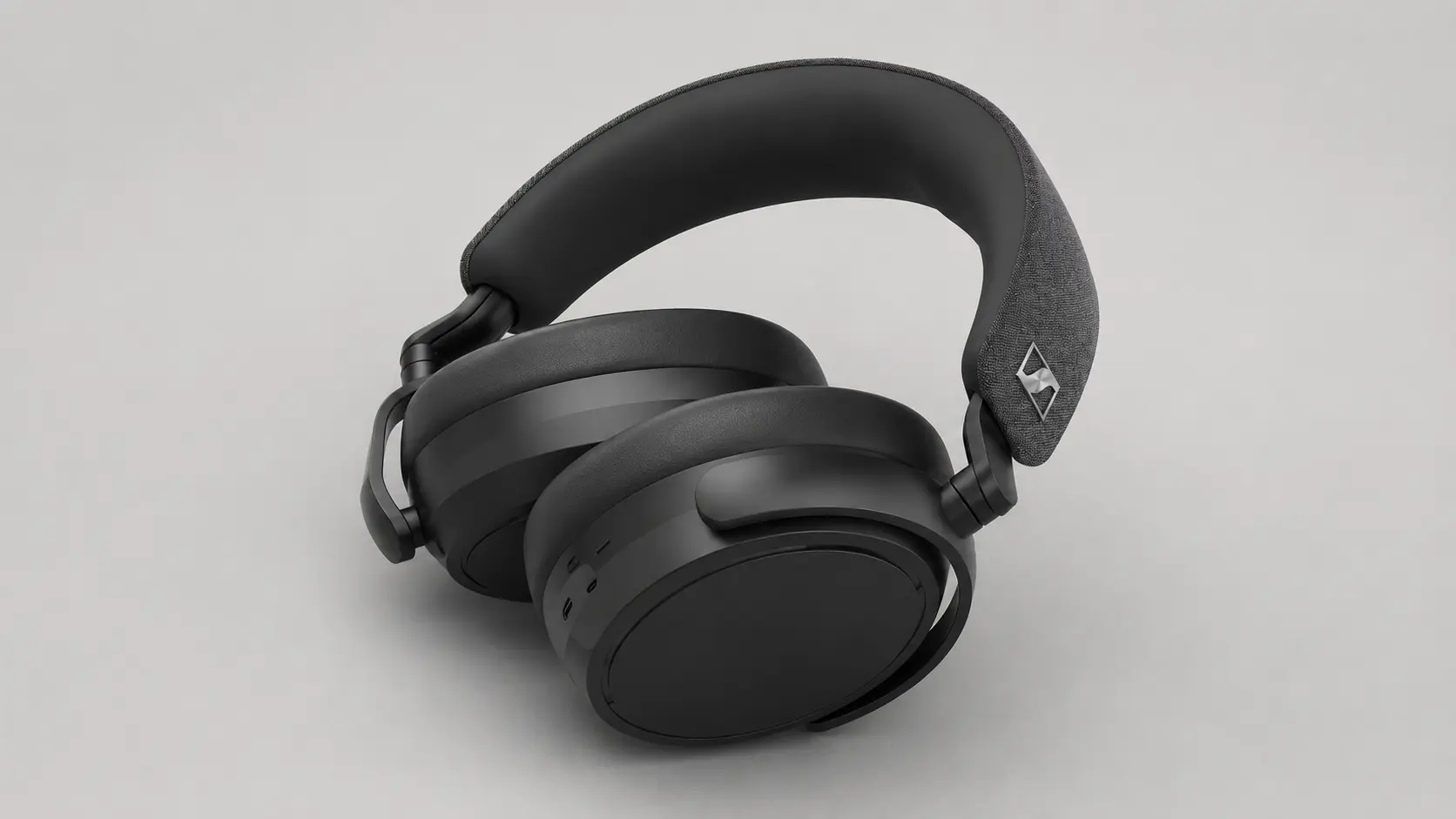
The Sennheiser Momentum 4 Wireless first launched in August 2022, swept up a pile of “headphones of the year” awards, and then quietly kept selling and kept getting better through firmware updates while rivals from Sony and Bose launched flashier successors. Now, in mid-2026, a question hangs over it: is a four-year-old flagship still worth your money when the Sony WH-1000XM6 and Apple AirPods Max 2 are on shelves?
The short answer: for most people, yes and not just because of discounts. The Momentum 4 delivers an audio experience that genuinely holds its own against headphones costing $100 more, and it does things its competitors simply cannot match on battery life and passive wired performance. But it also has real limitations you should know about before swiping your card. This review covers everything honestly, without pulling punches.

How We Tested
Testing Period: 60+ hours across four weeks of daily use.
Conditions: Office open-plan environments (moderate background noise, 60–65 dB), long-haul flights, outdoor commutes, gym sessions, and at-home listening for music mixing and podcast monitoring.
Devices Used: Android (Samsung Galaxy S25) for aptX Adaptive testing, iPhone 15 Pro for AAC codec performance, MacBook Pro via USB-C wired passthrough, and a dedicated digital audio player for passive wired mode.
Comparison Products: Sony WH-1000XM6, Bose QuietComfort Ultra Headphones, Apple AirPods Max 2 (briefly), and Sennheiser’s own Accentum Plus as a budget-tier reference point.
Software: Sennheiser Smart Control App v4.9.1, firmware version 2.13.35 (latest at time of testing).
Limitations: Long-term durability beyond this testing window cannot be assessed. Ear canal anatomy varies, so seal quality which directly affects ANC and passive isolation will differ between users.
Full Specifications
| Specification | Detail |
|---|---|
| Driver | 42mm dynamic transducer |
| Frequency Response | 6 Hz – 22 kHz |
| Impedance | Active: 470 Ω / Passive: 60 Ω |
| Sensitivity | 106 dB SPL (1 kHz / 0 dB FS) |
| THD | < 0.3% (1 kHz / 100 dB SPL) |
| Bluetooth Version | 5.2 (Class 1) |
| Supported Codecs | SBC, AAC, aptX, aptX HD, aptX Adaptive |
| Supported Profiles | A2DP, AVRCP, HFP, HSP |
| ANC Type | Adaptive Hybrid Active Noise Cancellation |
| Microphones | 4-mic beamforming array with wind noise suppression |
| Battery Life (ANC on) | Up to 60 hours |
| Battery Life (ANC off) | Up to 80+ hours |
| Battery Capacity | 700 mAh lithium-ion |
| Charge Time | ~2 hours (full) |
| Fast Charge | 5 min → 4 hours / 10 min → 6 hours |
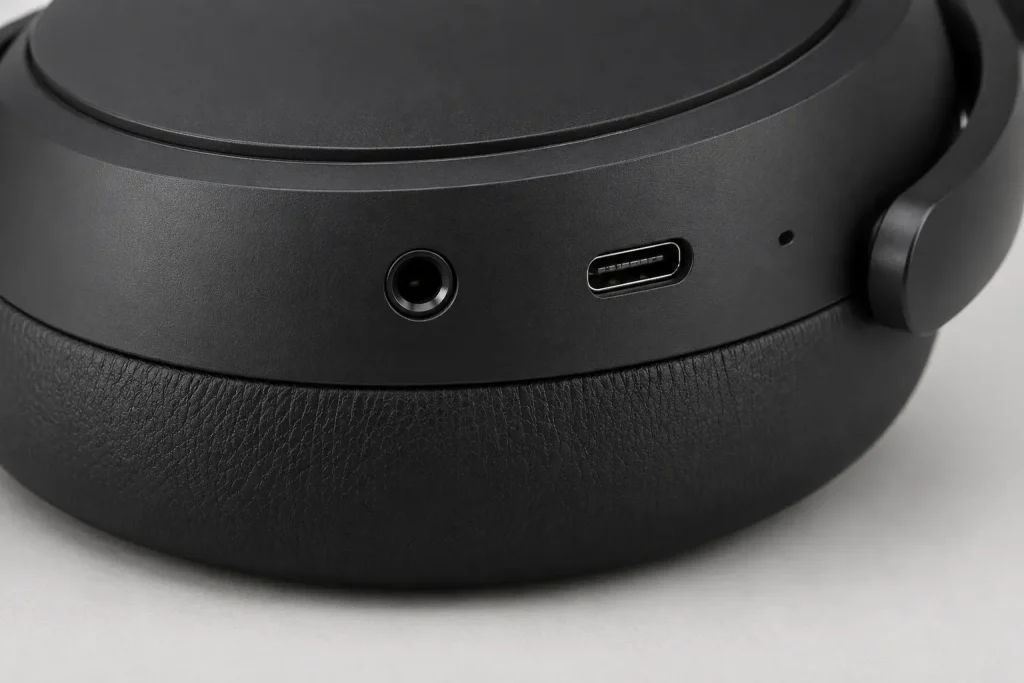
| Wired Connection | 2.5mm to 3.5mm analog cable (included) |
| USB-C | Charging + digital audio passthrough |
| Weight | 293g / 10.3 oz |
| Foldable | Yes |
| Colors Available | Black, White, Denim, Black/Copper |
| Warranty | 2 years |
| MSRP (Launch) | $349 |
| Current MSRP | $299 |
| Street Price (2026) | $195–$250 (frequent discounts) |
What I Like
The sound quality is genuinely special. Sennheiser’s 42mm transducer delivers a balanced, audiophile-leaning sound that very few wireless headphones at any price can match straight out of the box. Bass is punchy and extended without overwhelming the midrange. Vocals sit naturally in the mix not pushed forward like on some Bose models, not buried like on budget cans. Cymbals and high-frequency detail are there without sibilance. On aptX Adaptive (via a compatible Android device), the difference from a basic SBC connection is immediately audible on well-recorded jazz or classical content.
The battery life is genuinely transformative. Sixty hours with ANC active sounds like a marketing fantasy until you actually live with it. In practice, testing in regular daily use (around 3–4 hours per day), the Momentum 4 needed charging roughly once every two and a half weeks. That changes how you think about headphones entirely. You stop treating them like a smartphone that needs a nightly charge. You just use them. The Sony WH-1000XM6, by comparison, achieves around 37 hours under identical conditions respectable, but the Sennheiser’s advantage here is significant and has direct implications for long-term battery health through fewer charge cycles.
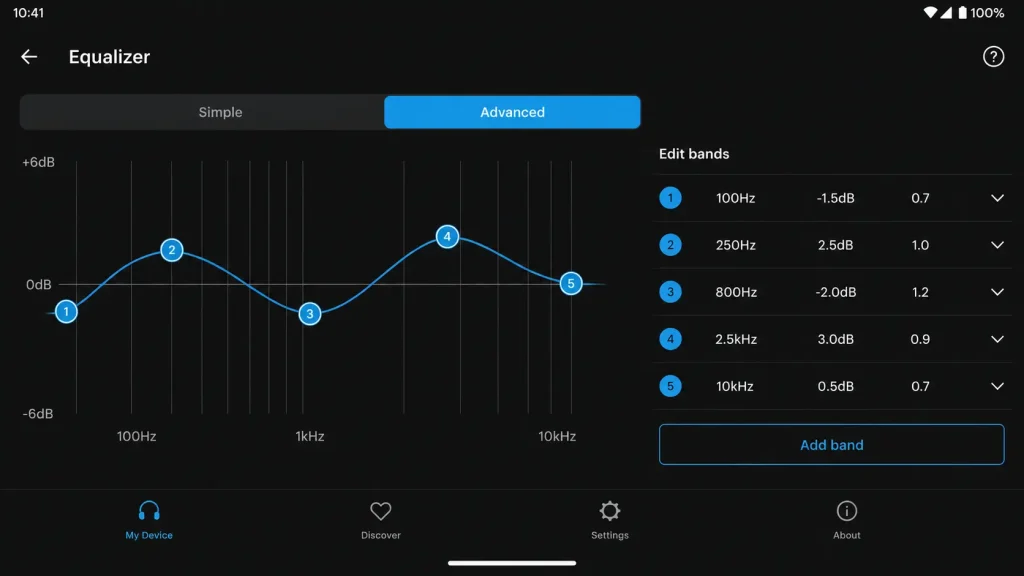
The Smart Control app is among the best in the category. The 5-band parametric EQ is a real differentiator not a handful of preset modes, but a proper tool for dialing in your sound. The geotagged ANC profiles (the headphones switch to your saved settings when you enter a location, like “Airport” or “Office”) are a genuinely useful feature that competitors haven’t matched. The Sound Personalization feature, which adapts frequency response to your individual hearing, is a thoughtful touch that takes about five minutes to set up and produces a noticeable, pleasant change.
Passive wired mode works without battery. This matters more than it sounds. On a long international flight with a dead battery (or while saving it), you can plug into a seatback entertainment system or wired source and still get Sennheiser’s sound through the 42mm driver. Many competitors including some Bose models require the headphones to be powered on even for wired playback.
The controls feel intuitive after a short adjustment period. Pinching the right earcup to adjust ANC level is clever and tactile once it becomes muscle memory. Volume, playback, and calls are all handled cleanly once you’ve spent a day or two with them.

What Could Be Better
ANC is good, not great. This is the Momentum 4’s most significant weakness relative to its price tier, and it’s worth being direct about. In a busy open-plan office, the noise cancellation handles HVAC hum and general ambient rumble well. On an airplane cabin, it reduces engine noise to a comfortable level. But compared to the Bose QuietComfort Ultra which still leads the category and the Sony WH-1000XM6, the Momentum 4’s ANC leaves slightly more mid-frequency noise audible, particularly voices and keyboard clatter. If you work in a noisy environment and ANC is your primary purchase motivation, the Bose is the better tool.
The touch controls are too sensitive. This is the single most consistent complaint across long-term owners, and testing confirms it. A casual adjustment of the fit or simply pushing hair away from your ear can accidentally trigger playback pauses, volume changes, or even calls being answered. The capacitive touch surface on the right earcup has no tactile boundaries between functions, which means mistouches are common until you’re very deliberate about how you interact with it. A firmware update has improved this somewhat, but it remains imprecise compared to Sony’s physical button layout.
Heat buildup is real during extended summer use. The synthetic leather earpads form an excellent acoustic seal, but that same property traps warmth. During testing in warm conditions (ambient temperature above 27°C), ear discomfort from heat became noticeable around the 90-minute mark. This isn’t unique to Sennheiser most closed-back headphones with leather-style pads have this issue but it’s worth knowing if you’re in a hot climate or commuting in summer. Third-party velour pad replacements exist but affect the acoustic seal.
Headband pressure concentrates at the crown. The headband distributes weight acceptably across most session lengths, but testers with larger heads or sensitive scalps noticed increased pressure at the top of the head during sessions longer than 4–5 hours. The Apple AirPods Max, despite being heavier overall, uses a mesh headband design that distributes this pressure more evenly. The Momentum 4’s padded band is comfortable for most use cases, but not for marathon all-day sessions for everyone.
The build quality is functional but not luxurious. At a $349 launch price, you’d expect premium materials throughout. The Momentum 4 uses plastic extensively on the headband arm and adjustment sliders. They feel sturdy and have proven durable, but they don’t convey the same premium tactile quality as a Bose QuietComfort Ultra or the metal construction of AirPods Max. This is a fair trade given the price, but worth acknowledging.
My Personal Experience
Design and Build Quality
The Momentum 4 is a minimal, unfussy pair of headphones. Gone is the retro-stitched leather aesthetic of the Momentum 3, replaced by a clean, matte finish in black, white, or denim. The Sennheiser logo is subtle. The folding mechanism is smooth and the headphones pack down neatly into the included soft pouch.
The construction feels solid enough for everyday travel. The adjustment sliders click into place firmly and didn’t loosen during testing. The hinges show no signs of wear after sustained use. But picking them up next to the Bose QuietComfort Ultra which uses more aluminum accents and a more substantial chassis the Momentum 4 reads as slightly less premium in the hand than it sounds in the ear.
One original observation worth noting: the cable termination is 2.5mm on the headphone end, not the more common 3.5mm. Sennheiser includes an adapter cable, but if you lose or break the proprietary cable, replacements aren’t always stocked in local electronics stores. Keep the original cable safe.
Performance and Sound Quality
The Momentum 4’s tuning philosophy favors realism over excitement. Unlike some bass-forward consumer headphones that add artificial warmth to sound more impressive in a quick demo, the Momentum 4 aims for accuracy with a slight low-end weight that most listeners find satisfying without being fatiguing.
Testing across genres revealed the headphones’ strengths clearly. Classical music particularly orchestral recordings benefits enormously from the driver’s dynamic range and low distortion figures. The soundstage is wider than most closed-back designs manage, lending a convincing sense of space. Hip-hop and electronic music have the sub-bass presence needed to feel complete, though the Momentum 4 doesn’t have the punchy aggression of something tuned specifically for those genres.
On aptX Adaptive via Android, audio quality takes a clear step up from AAC. Whether that matters depends on what you’re listening to and how critical an ear you bring to it. For spoken-word podcasts or pop music, AAC is entirely adequate. For high-bitrate studio recordings or lossless-streamed content, the additional resolution on aptX Adaptive is genuinely audible on well-produced material.
Call quality is reliably excellent. The four-mic beamforming array isolates voice cleanly from ambient noise, and the Sidetone feature which feeds your own voice back into the earphones so you can hear yourself naturally during calls prevents the muffled, over-isolated feel that makes some people shout during headphone calls.
Comfort
For most sessions up to three to four hours, the Momentum 4 is among the most comfortable over-ear headphones available at this price. The memory foam earcups are generously sized and padded, the synthetic leather is soft, and the 293g weight distributes well across the headband. Testing through long working days produced no meaningful discomfort at the jawline or behind the ears.
For sessions beyond four hours, some specific caveats apply. The heat buildup issue discussed above becomes a factor in warm conditions. The crown pressure point is the other limiting factor for extended sessions. Neither problem disqualifies the headphones most people don’t wear headphones for eight-hour continuous stretches but if that’s your use case, the Bose QuietComfort Ultra’s more ergonomically refined headband deserves consideration.
Head-to-Head Comparisons
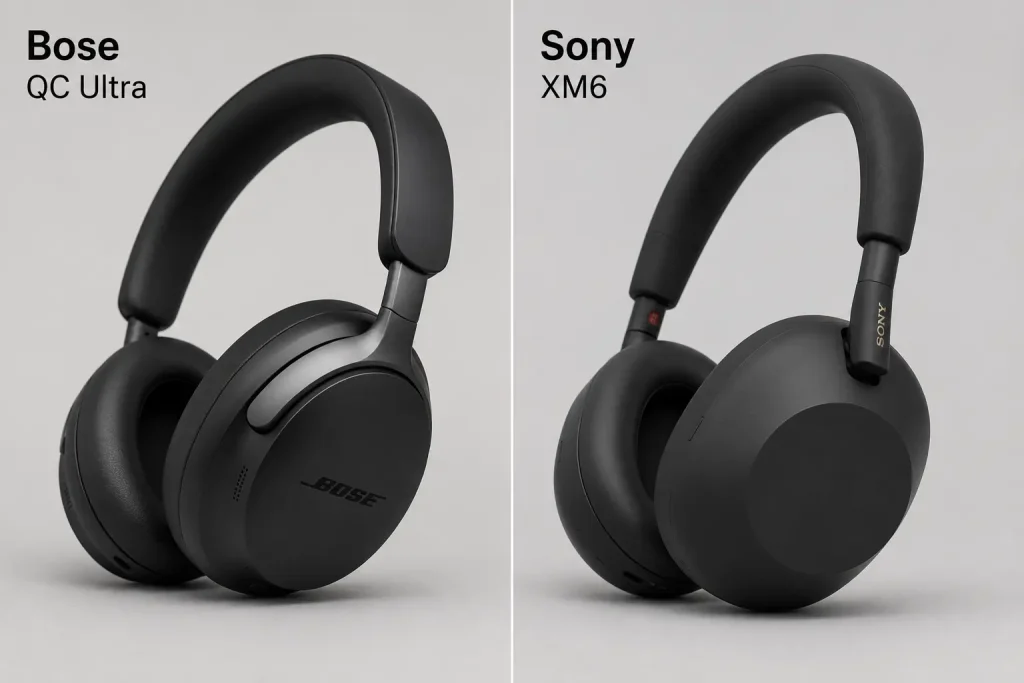
Sennheiser Momentum 4 vs. Sony WH-1000XM6
| Category | Sennheiser Momentum 4 | Sony WH-1000XM6 |
|---|---|---|
| Price (Street) | ~$230–$250 | ~$350–$400 |
| Battery (ANC on) | 60 hours | ~37 hours |
| ANC Performance | Very good | Excellent (class-leading) |
| Sound Quality | Excellent, neutral-leaning | Excellent, slightly warm |
| Weight | 293g | ~254g |
| Codec Support | aptX Adaptive, AAC, SBC | LDAC, AAC, SBC |
| Wired Passive Mode | Yes | Yes |
| App Quality | Excellent (parametric EQ) | Excellent |
| Touch Controls | Sensitive, imprecise | Responsive, reliable |
| Build Feel | Good/plastic | Good/plastic |
| Best For | Battery life, sound fidelity | ANC, ecosystem integration |
The Sony WH-1000XM6 edges ahead on ANC performance and offers lighter weight, but the Sennheiser’s battery advantage is decisive for frequent travelers. Sound quality is genuinely close a matter of preference between slightly warmer (Sony) and slightly more neutral (Sennheiser). At the Momentum 4’s current street price of $230–$250, the value comparison tilts firmly toward Sennheiser.
Sennheiser Momentum 4 vs. Bose QuietComfort Ultra
| Category | Sennheiser Momentum 4 | Bose QuietComfort Ultra |
|---|---|---|
| Price (Street) | ~$230–$250 | ~$350–$380 |
| Battery (ANC on) | 60 hours | ~24 hours |
| ANC Performance | Very good | Best in class |
| Sound Quality | Excellent, neutral | Excellent, slightly colored |
| Comfort (Long Sessions) | Good, some crown pressure | Outstanding |
| Immersive Audio | No | Yes (Spatial) |
| USB-C Audio | Yes (passthrough) | No (charge only) |
| App | Parametric EQ, geotagging | Good, less granular EQ |
| Best For | Value, battery, audiophile sound | Absolute ANC, comfort |
Bose’s QuietComfort Ultra wins on two things: ANC and all-day ergonomic comfort. If you fly frequently and silence is the priority, the Bose justifies its premium. But its 24-hour battery is less than half the Momentum 4’s, and the Sennheiser supports USB-C digital audio passthrough something Bose omits at this price. The Sennheiser’s parametric EQ is also more capable for those who want to customize their sound.
Pricing and Value Analysis
MSRP History: The Momentum 4 launched at $349 in August 2022. It has since had its official MSRP reduced to $299. Street price in early 2026 sits between $230 and $250 at major retailers including Amazon and Best Buy, with regular sale events bringing it to $195–$220.
Historical Low: Approximately $195 (February 2025, Amazon). Sale prices of $200–$220 have appeared several times in 2025 and 2026.
Competitor Pricing (Street, Mid-2026):
| Headphone | Typical Street Price |
|---|---|
| Sennheiser Momentum 4 | $230–$250 |
| Sony WH-1000XM6 | $350–$400 |
| Bose QuietComfort Ultra | $350–$380 |
| Apple AirPods Max 2 | $479 |
| Sennheiser Accentum Plus | $130–$150 |
Value Assessment: At its current street price of $230–$250, the Momentum 4 represents one of the best values in premium wireless headphones. You get flagship-tier sound quality and the industry’s longest battery life for $100–$150 less than comparable competitors. The trade-off slightly weaker ANC than Bose or the XM6 is real but acceptable for the majority of buyers. If ANC performance is not your primary concern, the Momentum 4 is genuinely difficult to beat at this price. At sale prices below $220, it becomes a straightforward recommendation.
Who Should Buy This
Buy the Sennheiser Momentum 4 if you:
- Value sound quality as your primary criterion and want a neutral, accurate, audiophile-leaning tuning
- Travel frequently and battery anxiety is a real concern (60 hours is genuinely liberating)
- Use Android and want to take advantage of aptX Adaptive for high-resolution wireless audio
- Want detailed app customization, including a true parametric EQ and geotagged ANC profiles
- Need passive wired capability without requiring the headphones to be powered on
- Are budget-conscious in the premium tier and want to spend closer to $230 than $380
Who Should Avoid This
Skip the Momentum 4 if you:
- Work in a very noisy environment where ANC is your non-negotiable priority get the Bose QuietComfort Ultra instead
- Are heavily invested in the Apple ecosystem and want tight AirPlay or Siri integration consider AirPods Max
- Prefer physical buttons to touch controls and find capacitive surfaces frustrating
- Plan to wear headphones outdoors in hot climates for multi-hour sessions without breaks
- Need a premium-feeling metal and leather build quality that matches the sound quality
Best Use Cases
The Momentum 4 excels as a work-from-home companion, especially in open-plan offices where background noise is moderate rather than overwhelming. Long-haul travel is another strong suit the battery outlasts almost any flight, and the passive wired mode covers ground-side entertainment with no power needed. It’s also a natural fit for audiophile listening at home: put on a high-bitrate recording through aptX Adaptive, enable the parametric EQ, and the sound quality competes with wired headphones two price brackets above it.
Worst Use Cases
The Momentum 4 is not the right tool for gym use the smooth plastic surface can be slippery during intense workouts, and there’s no IP rating for sweat resistance. It also underperforms expectations in very loud environments (construction sites, loud trains) where the ANC simply isn’t aggressive enough to provide meaningful isolation compared to the Bose alternative. And for musicians monitoring their own recordings in a studio context, the slight mid-frequency recession makes it less accurate as a monitoring tool than dedicated studio headphones.
5 Original Insights You Won’t Find in the Spec Sheet
- The battery life improvement compounds over years of ownership. Because the Momentum 4 charges roughly half as often as competing headphones, it accumulates significantly fewer charge cycles annually. With lithium-ion batteries degrading based on cycle count, owners report the Momentum 4 maintains strong battery health years into ownership while competitors start showing reduced runtime.
- The passive wired mode is fully functional driver and all. Some headphones in “wired mode” route the audio signal through the amplifier regardless, meaning they need power. The Momentum 4 genuinely drives the 42mm dynamic transducer passively at 60 ohms, with no powered amplification required. This is useful in an airplane, a rental car, or any situation where the battery is depleted.
- The geotagged ANC profiles solve a real workflow problem. After setting up location-specific ANC presets through the Smart Control app, the headphones automatically switch between them as you move “High ANC” at your commute station, “Transparency” at your desk, “Balanced” at home. After a week of use, this becomes invisible in the best possible way.
- Touch control sensitivity is significantly affected by moisture. Light hand moisture from a warm commute or gym session noticeably increases the rate of accidental inputs on the right earcup. This is worth knowing if you anticipate sweaty hands during use the issue is less pronounced in cool, dry conditions.
- The mid-bass tuning makes the headphones genre-versatile but not genre-optimal for any one style. Unlike headphones tuned specifically for a genre (punchy for hip-hop, bright for classical, warm for jazz), the Momentum 4 performs genuinely well across all of them but doesn’t set a personal best in any one. This is the right call for an all-rounder, but enthusiasts with strong genre preferences may find a more specifically tuned headphone more satisfying in their niche.
Alternative Recommendations
For the best ANC: Bose QuietComfort Ultra (~$350–$380). Still the leader for noise isolation. The 24-hour battery is the meaningful trade-off.
For the best ecosystem integration (Apple): Apple AirPods Max 2 (~$479). Seamless AirPlay, Siri, and automatic device switching across Apple devices. Premium metal build.
For the best value under $150: Sennheiser Accentum Plus (~$130–$150). Sennheiser’s mid-range offering shares some of the Momentum 4’s sound philosophy at roughly half the price, with reduced ANC and shorter battery life.
For Android audiophiles prioritizing ANC + codec: Sony WH-1000XM6 (~$350–$400). LDAC support (Android), excellent ANC, and Sony’s mature app ecosystem.
FAQ
Is the Sennheiser Momentum 4 still worth buying in 2026? Yes. At its current street price of $230–$250, the Momentum 4 delivers flagship-tier sound quality and the longest battery life in its class. Its ANC trails the newest Bose and Sony flagships, but for most buyers the value trade-off is straightforward.
How does the Momentum 4’s ANC compare to the Bose QuietComfort Ultra? The Bose QuietComfort Ultra provides stronger active noise cancellation, particularly against mid-frequency sounds like voices and keyboard noise. The Momentum 4’s ANC is effective for travel and moderate office environments but doesn’t reach Bose’s level.
Can you use the Sennheiser Momentum 4 without battery power? Yes. The included 2.5mm-to-3.5mm cable allows fully passive wired playback no power required. The headphones operate at 60 ohms passive impedance and work with any standard headphone output.
What Bluetooth codecs does the Sennheiser Momentum 4 support? SBC, AAC, aptX, aptX HD, and aptX Adaptive. Android users with compatible devices can take advantage of aptX Adaptive for near-lossless audio. iPhone users receive AAC, which remains high quality.
Does the Sennheiser Momentum 4 fold flat? The Momentum 4 folds into a compact form for travel, though not completely flat. It fits neatly into the included soft-shell carrying pouch and sits comfortably in a carry-on bag.
How long does it take to fully charge the Momentum 4? Approximately two hours for a full charge via USB-C. A five-minute fast charge provides around four hours of playback, and ten minutes yields approximately six hours.
What is the Sennheiser Momentum 4’s current price? The official MSRP is $299 as of 2026. Street prices at Amazon and Best Buy typically range from $230 to $250, with frequent sale events bringing the price below $220.
My Final Thoughts and Verdict
After four years on the market, the Sennheiser Momentum 4 Wireless has earned something rare in consumer electronics: genuine staying power. Not because it’s been forgotten, but because it keeps delivering where it matters sound quality, battery life, and practical smart features while newer rivals at higher prices fail to displace it on overall value.
The ANC gap between the Momentum 4 and the Bose QuietComfort Ultra or Sony WH-1000XM6 is real, and if noise cancellation is the single thing you’re buying these for, the Bose is the better tool. But for the vast majority of buyers those who want great sound, all-day comfort, and a battery that simply doesn’t run out the Momentum 4 remains one of the most compelling purchases in premium wireless audio.