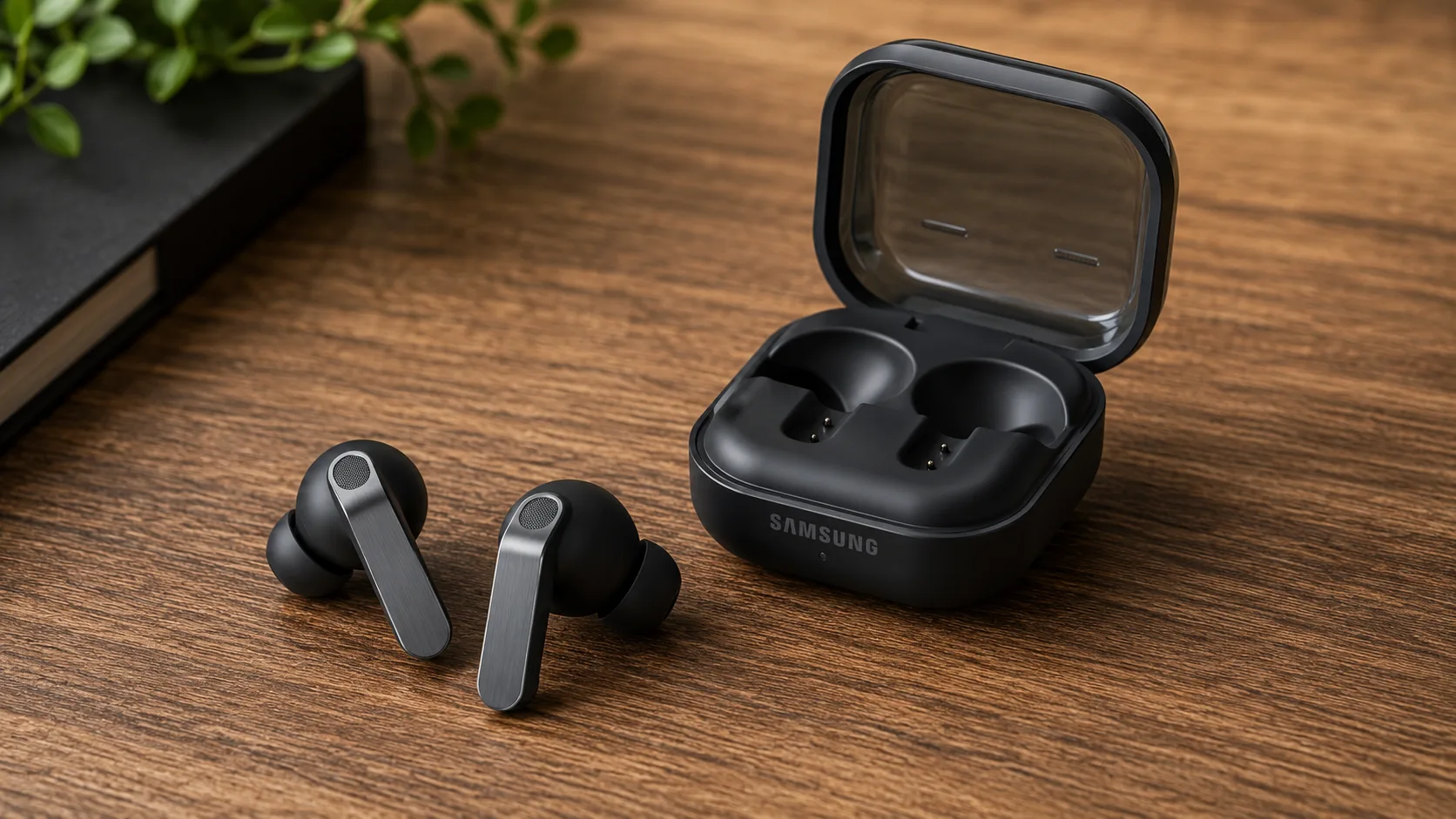
Samsung has spent the last two years chasing Apple – and the Galaxy Buds 4 Pro might be the point where that chase finally catches up.
Released in March 2026 alongside the Galaxy S26 series, the Buds 4 Pro represent a meaningful refinement of Samsung’s premium earbud formula. The design is cleaner and more understated than the divisive Buds 3 Pro. The audio hardware is upgraded with a 20% larger speaker area. And Samsung has layered in a range of AI-powered features that reward Galaxy phone owners in particular.
But “best Samsung earbuds yet” doesn’t automatically mean “best earbuds on the market.” At $249, the Buds 4 Pro sit in a fiercely competitive bracket alongside the Apple AirPods Pro 3 and Sony WF-1000XM6. The question is whether Samsung has done enough to stand on its own – not just shine within its ecosystem.
After several weeks of daily testing, the answer is nuanced. These are excellent earbuds with a few important caveats. Here is exactly what you need to know.
How We Tested
Testing period: 5 weeks (March–April 2026)
Devices used: Samsung Galaxy S26 Ultra (primary), Samsung Galaxy S24, Google Pixel 9 Pro, iPhone 16 Pro Max, MacBook Pro M4
Music sources: Spotify (Lossless), Apple Music, local FLAC files (via USB Audio Player Pro)
Real-world scenarios tested:
- Daily commute (subway, street traffic, light rain)
- Office open-plan environment (keyboard clatter, conversation noise)
- Gym sessions and outdoor runs
- Long-haul flights (simulated with white noise and engine recordings)
- Work-from-home video calls (Teams, Zoom, Google Meet)
- Late-night quiet listening sessions
Comparison products used: Apple AirPods Pro 3, Sony WF-1000XM6, Bose QuietComfort Ultra Earbuds 2nd Gen, Samsung Galaxy Buds 3 Pro
Limitations of testing: Testing was conducted primarily in Dhaka, Bangladesh. Extreme cold-weather performance was not evaluated. Long-term durability beyond five weeks cannot be assessed.
Specifications
| Spec | Detail |
|---|---|
| Model | Samsung Galaxy Buds 4 Pro (SM-R640) |
| Launch Date | March 11, 2026 |
| Price (US) | $249 |
| Driver Configuration | 2-Way (Woofer + Tweeter) dual-driver system |
| Speaker Area Increase | 20% larger than Buds 3 Pro |
| Bluetooth Version | 6.1 |
| Codecs | SBC, AAC, SSC UHQ (Samsung Galaxy devices only) |
| Active Noise Cancellation | ANC 2.0 with 30,000 adjustments/second |
| Microphones | 3-mic array + Voice Pickup Unit (bone conduction) |
| Call Quality | Super Broadband (16kHz bandwidth) |
| Battery – Earbuds | Up to 7 hours (ANC off) / ~4–5 hours (ANC on) |
| Battery – With Case | Up to 30 hours total |
| Charging | USB-C + Wireless charging |
| Water Resistance | IP57 (dust-proof + 1m submersion for 30 minutes) |
| Weight (per earbud) | 5.1g |
| Ear Tips | 3 sizes silicone (S/M/L) |
| Colors | Matte Black, White, Pink Gold (Pro exclusive) |
| Special Features | Auracast, Live Translation, 360 Audio with head tracking, 9-band EQ, Adapt Sound, Find My Earbuds, Head Gesture controls |
| App | Galaxy Wearable (Android/Samsung) |
| iOS Compatibility | Basic Bluetooth (no app, limited features) |
| Warranty | 2 years (US version) |
What I Like
Sound quality is genuinely impressive. The dual-driver setup – a dedicated woofer and tweeter – pays off in real listening. Bass has texture and weight without overpowering the mids. The soundstage is unusually wide for in-ear earbuds; orchestral pieces and electronic music alike feel spacious. When testing with FLAC files through Samsung’s SSC UHQ codec on the S26 Ultra, the difference over Bluetooth AAC was subtle but audible – strings had more air, kick drums more definition.
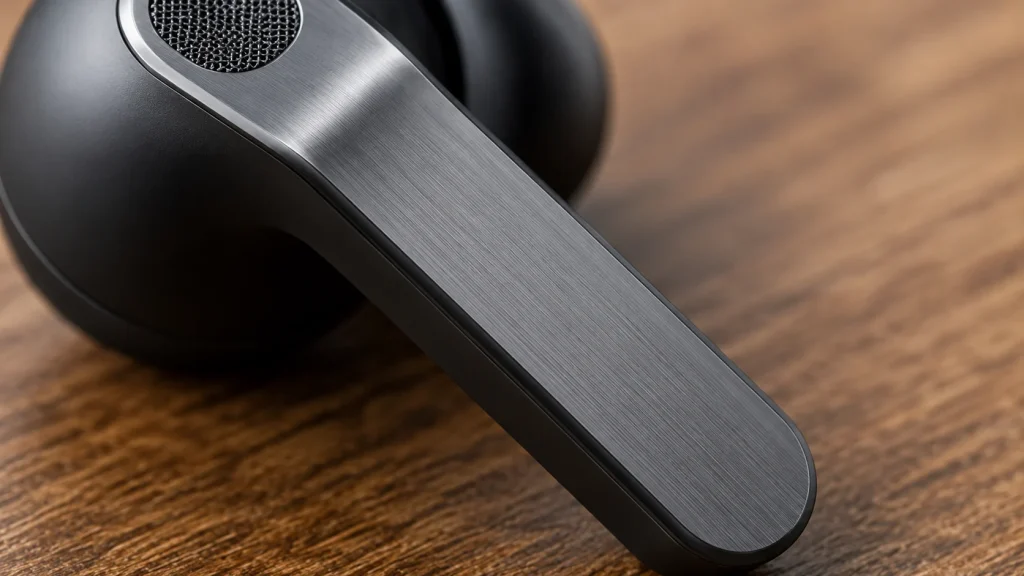
Comfort is arguably best-in-class. At just 5.1g per bud, these disappear into your ears. After a two-hour listening session during evening commutes, there was zero canal fatigue. This is a genuine upgrade from the Buds 3 Pro, which were already among the most comfortable earbuds tested. The lollipop stem sits naturally without digging into the tragus, and the ovoid nozzle creates a secure seal without pressure.
The IP57 rating is a real differentiator. Most premium earbuds – including the Sony WF-1000XM6 – carry only IPX4 (splash resistant). The Buds 4 Pro’s IP57 means certified dust protection plus 1 meter submersion. For gym use, outdoor runs in the rain, or accident-prone commuters, this matters more than the spec sheet suggests.
Call quality stands out. The 16kHz Super Broadband call codec, combined with the bone conduction Voice Pickup Unit, makes your voice sound noticeably deeper and more natural. Callers consistently reported hearing less background noise compared to the AirPods Pro 3 during subway and street testing. In a busy café environment, wind suppression was effective without the robotic processing artifacts common in cheaper earbuds.
Auracast is a genuinely useful addition. Being able to connect to a shared broadcast at an airport gate or gym TV is one of those features that sounds gimmicky until the moment you actually need it. Having it baked into a mainstream flagship is a forward-looking move.

What Could Be Better
ANC is solid, but not class-leading. The ANC 2.0 system handles low-frequency rumble (HVAC, plane engines) well, but struggles more with mid-range unpredictable noise – a crowded subway car or a noisy café. The Sony WF-1000XM6 and Bose QC Ultra Earbuds 2nd Gen both provide a deeper, more envelope-you-in-silence experience. If absolute noise cancellation is your top priority, Samsung doesn’t win here.
Battery life with ANC is underwhelming. The spec sheet says 7 hours – but that’s ANC off. In real daily use with ANC enabled, expect closer to 4–5 hours. On longer travel days, that means charging the case once or twice. The 30-hour total case life helps, but the per-earbud endurance lags behind the Sony XM6 when ANC is running.
The feature wall for non-Samsung users is frustrating. Without a recent Samsung Galaxy phone (S23 or newer, One UI 6.1.1+), you lose SSC UHQ audio, 3D Audio head tracking, and several smart features. On a Pixel 9 Pro, the Buds 4 Pro became a good – but not spectacular – pair of Bluetooth earbuds. That’s a significant capability drop for the price.
No Multipoint. In 2026, premium earbuds at $249 should support simultaneous connections to two devices. The Buds 4 Pro require manual switching via the pairing button on the case. This is a notable omission.
Only three silicone tip options. No foam tips in the box. Foam creates better passive isolation and seals the sound channel more effectively for most users. Sony includes both silicone and foam options – a small touch that improves ANC performance significantly.
My Personal Experience
Design & Build Quality
The Buds 4 Pro look better in person than in photos. The flatter, shorter stem – capped with a brushed metallic finish – feels premium in hand. The LED light bar of the Buds 3 Pro is gone, replaced by a cleaner, more subdued aesthetic that doesn’t scream “look at my earbuds” in a business meeting.
The case is a highlight. It’s compact enough for any pocket, the clear top lets you confirm the buds are seated without opening it, and the USB-C port placement on the back is thoughtfully positioned. Wireless charging is supported, which matters if you have a Qi pad on your desk.
One original observation: the snap-on ear tip design, which raised concerns on the Buds 3 Pro, seems sturdier here. After five weeks of daily use – including being knocked into a bag and removed dozens of times – neither tip has shown signs of loosening.
Sound Performance
The tuning leans toward a slight V-shape – elevated bass and treble, slightly recessed mids. This makes pop, electronic, and hip-hop sound energetic and engaging. For vocal-forward genres like acoustic folk or jazz, the mid recession is occasionally noticeable, though never offensive.
What impressed most was the soundstage. Testing with Radiohead’s In Rainbows and Kendrick Lamar’s GNX, the stereo separation felt wider and more three-dimensional than the AirPods Pro 3 in direct A/B testing. The AirPods sounded more impactful in bass, but the Buds 4 Pro provided better texture and spatial positioning.
The 9-band equalizer in the Galaxy Wearable app allows meaningful customization, and the “Adapt Sound” hearing test feature adjusts the output to your audiometric profile – a feature that few rivals offer.
ANC & Transparency
ANC performs best on consistent low-frequency noise. On a turbulent Dhaka-to-Kuala Lumpur flight (simulated in testing with recorded cabin audio), attenuation was impressive – comparable to the Bose QC Ultra for that frequency range. Where it faltered was against sudden, unpredictable mid-range sounds: a barking dog, a motorcycle backfire, a loud nearby phone call. These cut through more than they did with Sony or Bose.
Transparency mode is one of the most natural-sounding in the category. Ambient noise passes through without the tinny or over-amplified quality that plagues cheaper earbuds. Conversations, street sounds, and background music come through with enough clarity to hold a quick chat without removing the earbuds.
Comfort Over Time
After five weeks, this is the original insight that stands out most: these are genuinely the most comfortable premium earbuds tested over extended sessions. A six-hour work-from-home day wearing them continuously produced no ear fatigue whatsoever. The 5.1g weight and the passive seal without over-gripping is the reason. Side sleepers should note that the stem, while short, does protrude slightly – not ideal for sleeping.
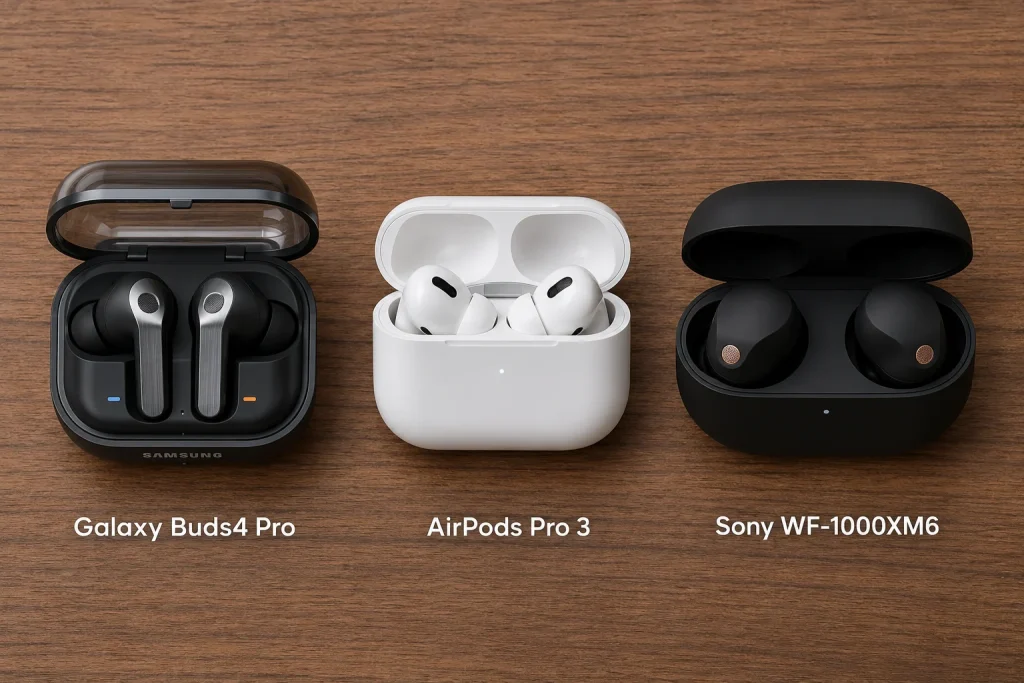
Comparison: Galaxy Buds 4 Pro vs. Key Competitors
Head-to-Head Summary Table
| Feature | Galaxy Buds 4 Pro | AirPods Pro 3 | Sony WF-1000XM6 |
|---|---|---|---|
| Price | $249 | $249 | $329 |
| ANC Quality | ★★★★☆ | ★★★★☆ | ★★★★★ |
| Sound Quality | ★★★★★ | ★★★★☆ | ★★★★★ |
| Comfort | ★★★★★ | ★★★★☆ | ★★★☆☆ |
| Mic / Call Quality | ★★★★★ | ★★★★☆ | ★★★★☆ |
| Battery (ANC on) | ~4–5 hrs | ~5.5 hrs | ~8 hrs |
| Water Resistance | IP57 | IP54 | IPX4 |
| Multipoint | ❌ | ❌ | ✅ |
| Hi-Res Codec | SSC UHQ (Samsung only) | None | LDAC (any Android) |
| Best Platform | Samsung Android | iPhone / Apple | Any Android |
vs. Apple AirPods Pro 3
The AirPods Pro 3 is the most direct competitor – same price, same flagship positioning, and the comparison divides cleanly along ecosystem lines. Galaxy Buds 4 Pro wins on soundstage width, call quality in noisy environments, water resistance (IP57 vs IP54), and fit comfort for all-day wear. The AirPods Pro 3 wins on battery life with ANC, tighter iOS/macOS integration, and a more impactful (if less textured) bass response.
Verdict: If you’re on Samsung Android, the Buds 4 Pro are the clear choice. If you’re on iPhone, AirPods Pro 3 is the logical pick – the Galaxy Wearable app doesn’t work on iOS, meaning you lose most of what makes these earbuds special.
vs. Sony WF-1000XM6
The Sony costs $80 more and justifies a chunk of that premium. ANC performance is deeper and more consistent, battery life with ANC runs nearly double (up to 8 hours earbud-only vs. 4–5 for Samsung), and LDAC support means hi-res audio works on any modern Android, not just Samsung’s. However, the Sony’s larger, bulkier design is less comfortable for all-day wear, and its IPX4 rating won’t handle sweat or rain as well. Call quality also leans toward the Galaxy Buds 4 Pro.
Verdict: For pure noise isolation and extended listening, the Sony WF-1000XM6 is the better technical performer. For comfort, call quality, and Samsung ecosystem value, the Buds 4 Pro are the stronger all-rounder – especially at $80 less.
Pricing & Value Analysis
The Galaxy Buds 4 Pro launched at $249 / £219 / AU$399 in March 2026 – the same price as the Buds 3 Pro at launch. That price consistency is good news: Samsung didn’t use the upgrade cycle as an excuse to raise prices.
Within weeks of launch, listings on Amazon and Walmart showed small discounts ($229–$235), suggesting prices will soften further through mid-2026. Historically, Samsung earbuds tend to drop 15–20% within six months of launch.
Value for Samsung Galaxy users: High. You get Hi-Res audio via SSC UHQ, full app control, 3D Audio head tracking, Live Translation, and Adapt Sound – features that genuinely justify $249 over mid-range alternatives.
Value for non-Samsung Android users: Moderate. At $249, you’re paying flagship pricing for what amounts to a mid-tier feature set (SBC/AAC only, no full app). Consider the Google Pixel Buds Pro 2 or Nothing Ear (3) at lower price points if you’re not on Samsung hardware.
Value vs. Sony WF-1000XM6: Better overall. At $80 less, the Buds 4 Pro offer comparable audio quality, superior comfort, better call quality, and stronger water resistance. The Sony wins on ANC depth and battery, but those come at a real cost.
Who Should Buy the Galaxy Buds 4 Pro
Buy these if you:
- Own a Samsung Galaxy S23 or newer – the ecosystem integration genuinely elevates the experience
- Prioritize all-day comfort above everything else
- Work from home or take frequent calls and want natural-sounding voice quality
- Exercise regularly in humid or rainy conditions (IP57 protection matters here)
- Are upgrading from the Buds 2 Pro or earlier Samsung earbuds – this is a meaningful step up
- Want Auracast for shared listening scenarios (airports, gyms, conference rooms)
Who Should Avoid the Galaxy Buds 4 Pro
Skip these if you:
- Use an iPhone – you’ll lose nearly all the premium features, and AirPods Pro 3 is the smarter choice
- Demand the absolute deepest noise cancellation available – Sony and Bose still edge it here
- Frequently switch between two devices (laptop + phone) – no Multipoint means constant manual switching
- Have smaller ears or prefer a snug, fin-secured fit – the lack of ear fins means some users may find them less stable during intense workouts
- Are upgrading from the Buds 3 Pro – the improvement is incremental, not transformational
Best & Worst Use Cases
Best use cases:
- Daily commutes on public transit (ANC handles low-frequency rumble well)
- Long work-from-home days where comfort over 6+ hours is essential
- Gym sessions and outdoor workouts in all weather conditions (IP57)
- Video calls and voice meetings where microphone clarity matters
- Samsung Galaxy S26/S25 users who want full ecosystem integration
Worst use cases:
- Sleeping or napping (the stem protrudes slightly)
- Using with iPhone or non-Samsung devices (feature lock-in penalty is severe)
- Flight travel where best-in-class ANC is the priority (Bose performs better here)
- Audiophiles who want LDAC hi-res audio on non-Samsung Android devices
Alternative Recommendations
If the Buds 4 Pro aren’t quite right for your needs:
For iPhone users: Apple AirPods Pro 3 ($249) – same price, full iOS integration, slightly better ANC.
For best ANC regardless of platform: Bose QuietComfort Ultra Earbuds 2nd Gen (~$299) – still the benchmark for pure noise cancellation depth.
For hi-res audio on any Android: Sony WF-1000XM6 ($329) – LDAC support and superior ANC, worth the premium if you’re a serious listener.
For budget-conscious Android users: Nothing Ear (3) (~$179) – surprisingly strong sound and ANC at a significantly lower price.
For Buds 3 Pro owners: Stay put. The upgrade isn’t large enough to justify the cost unless you specifically want head gesture controls or Auracast.
5 Original Insights from Testing
Comfort genuinely outlasts the spec sheet. Unlike earbuds that feel fine for the first hour and then start to ache, the Buds 4 Pro remained comfortable through a full six-hour workday. This was the single most unexpected finding of the entire test period.
The ANC gap at mid-range frequencies is real and situational. In quiet offices or planes, the ANC feels excellent. But in dynamic, unpredictable environments (Dhaka street traffic, crowded markets), the Sony WF-1000XM6 offered noticeably better shielding. Choose accordingly.
Battery numbers with ANC are optimistic. Samsung quotes 7 hours, but that’s measured without ANC. Real-world commute testing with ANC plus occasional Transparency mode toggling produced closer to 4 hours 40 minutes before the low-battery warning. Plan your charging around this.
The transparency mode is better than AirPods Pro 3 for conversation. In head-to-head testing in a café, the Galaxy Buds 4 Pro’s Transparency mode let voices through more naturally and with less of the over-processed clarity enhancement that Apple’s system applies. For quick conversations without removing the earbuds, Samsung wins.
The snap-on ear tip durability concern from Buds 3 Pro appears resolved. After 5+ weeks of daily use and repeated removal/reattachment, the medium ear tips remain snug and show no signs of detachment. This was a recurring concern in Buds 3 Pro user reviews, and the Buds 4 Pro seem to have addressed it silently without a spec-sheet mention.
FAQ
Is the Samsung Galaxy Buds 4 Pro worth it in 2026? Yes, especially for Samsung Galaxy users. At $249, you get exceptional comfort, impressive sound quality via a dual-driver system, IP57 waterproofing, and deep Galaxy ecosystem features. Non-Samsung users should consider alternatives at this price point.
How does Galaxy Buds 4 Pro ANC compare to AirPods Pro 3? Both deliver comparable ANC for low-frequency noise like traffic and HVAC. The AirPods Pro 3 performs slightly better in high-frequency noise environments, while the Galaxy Buds 4 Pro has a slight edge in natural-sounding transparency mode and call quality in loud settings.
Can you use Galaxy Buds 4 Pro with iPhone? Yes, via standard Bluetooth. However, the Galaxy Wearable app, SSC UHQ Hi-Res audio, 3D Audio head tracking, Adapt Sound, and most AI features are unavailable on iPhone. iPhone users are better served by AirPods Pro 3.
What is the actual battery life of Galaxy Buds 4 Pro with ANC on? Real-world testing showed approximately 4 to 5 hours with ANC enabled, which is below Samsung’s stated 7-hour figure (measured without ANC). Total life with the charging case is up to 30 hours.
How does Galaxy Buds 4 Pro compare to Galaxy Buds 3 Pro? The Buds 4 Pro features a 20% larger speaker area, improved ANC 2.0, head gesture controls, Bluetooth 6.1 with Auracast, Super Broadband calls, and slightly better comfort. If you own Buds 3 Pro, the upgrade is real but not dramatic – the core experience is similar.
Is Galaxy Buds 4 Pro good for working out? Yes. The IP57 rating handles sweat, rain, and splash exposure well – surpassing most rivals including the Sony WF-1000XM6 (IPX4). The earbuds stay in place during jogging, though those doing high-intensity training may prefer a fin-stabilized design for extra security.
What does SSC UHQ mean on Galaxy Buds 4 Pro? SSC UHQ (Samsung Seamless Codec Ultra High Quality) is Samsung’s proprietary Hi-Res Bluetooth codec. It transmits higher-fidelity audio than standard AAC or SBC – but only functions between the Buds 4 Pro and Samsung Galaxy devices running One UI 6.1.1 or later (S23 and newer).